
Tablets for Kids: Closing the Digital Gap One Student at a Time

By Annabel Mumba
Annabel Mumba is AYC’s Donor Relations Coordinator. She is a Scholarship Fund recipient, and a graduate of Mulungushi University with a Bachelor of Arts in Communications (Journalism), and also one of our Success Stories.
Co-written by Pamela O’Brien, African Education Program’s Development Director, who is mentoring Annabel.
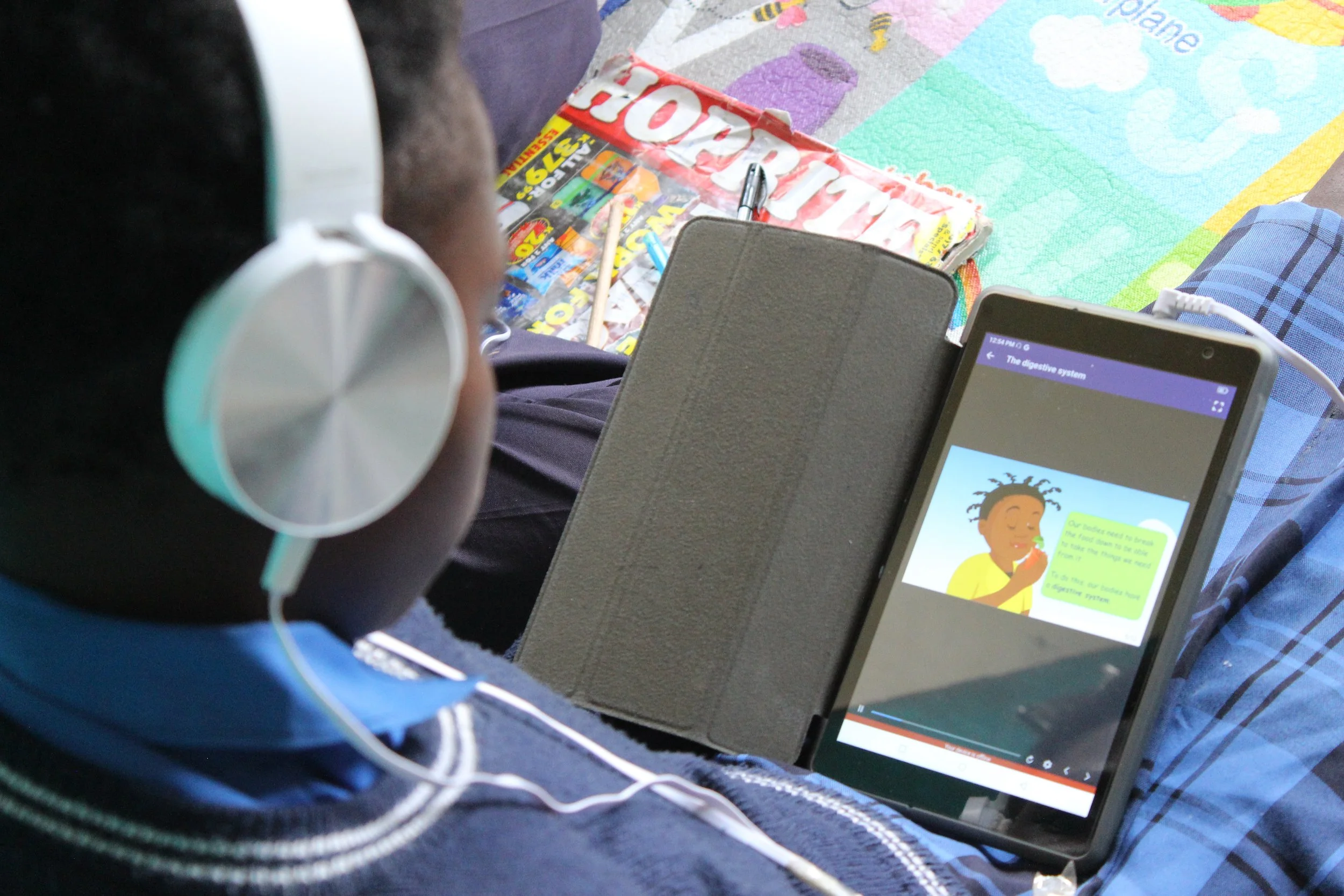
Students access exam-ready content from the approved Zambian curriculum.
In Zambia, only a small minority of students have access to technology in education. For many students in communities like Kafue, a tablet is not a learning tool; it is an unfamiliar object, something seen from a distance but never held. The digital gap is real, and for children already navigating poverty, limited resources, and overcrowded classrooms, it widens every year.
At Amos Youth Centre, we believe every child deserves to learn in a way that works for them. In 2024, thanks to a partnership between the African Education Program and Tablets for Kids, we launched the Tablets for Kids Pilot Program, bringing digital learning directly into the hands of our students for the very first time.
“At AYC, we are constantly looking for ways to level the playing field for our students. While our traditional classroom settings are strong, we realized that technology could be the ultimate tool for individualized learning.”
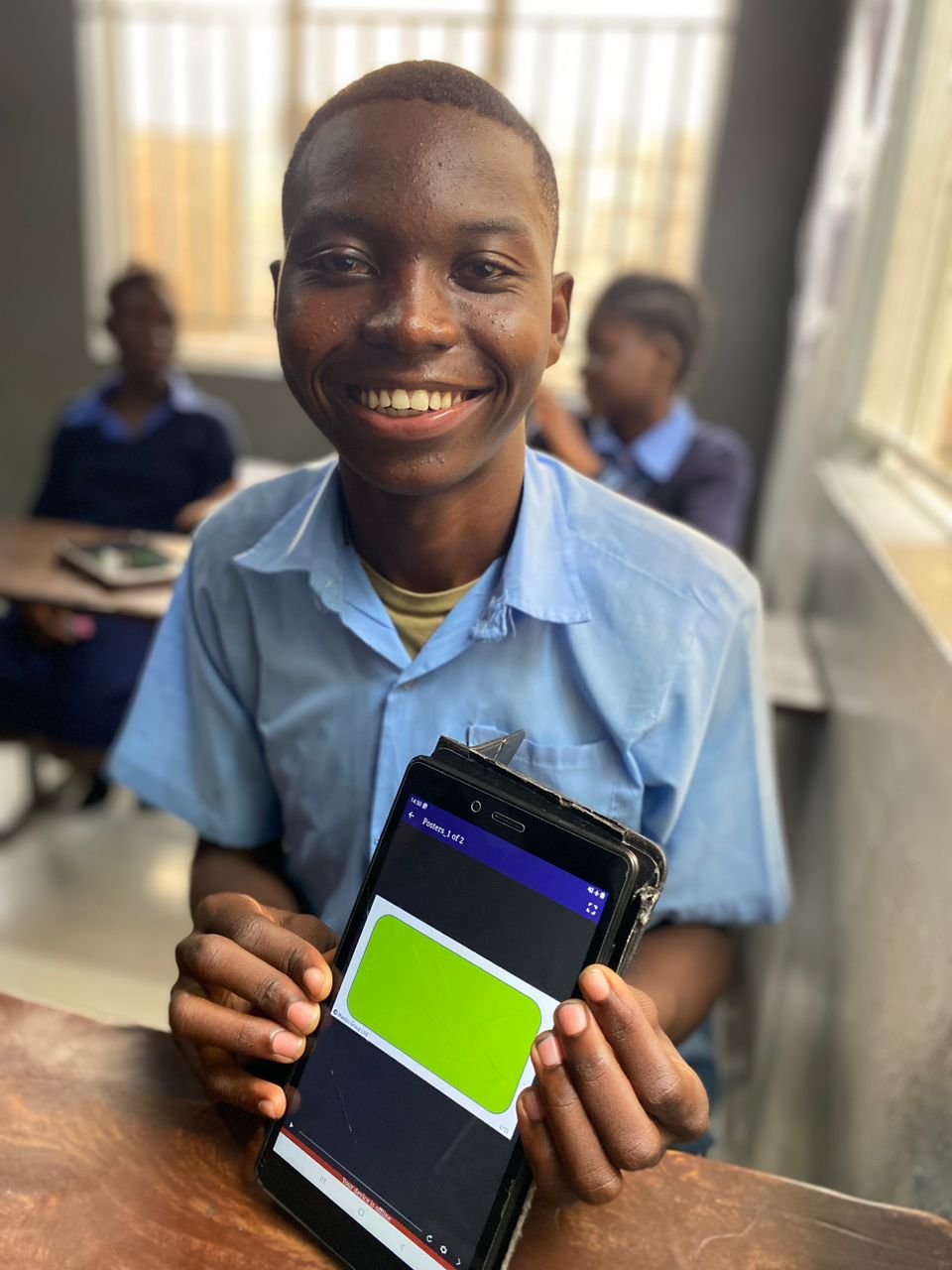
Grade 5 and 6 students at AYC engage with tablets for the first time.
The Pilot Phase: A New Way of Learning
The pilot launched with 38 learners across Grades 5, 6, and 7, introducing them to Mwabu, a digital learning platform aligned with the Zambian curriculum. Mwabu provides data-driven, technology-based education solutions in sub-Saharan Africa, focusing on improving learning outcomes through interactive content, teacher support, and comprehensive data analytics. The platform captures data on student performance, attendance, and usage, enabling schools and organizations to make evidence-based decisions, identify learning gaps, and measure impact.
Analytics help in evaluating how well educational programs are working and if they meet local needs, supporting long-term improvements. Evidence-Based Reporting enables us to analyze and report on content usage, identify knowledge gaps, and quantify learning improvements.
Over 210 sessions, AYC students had access to interactive lessons, videos, and exam-ready content they could engage with at their own pace.
The results were immediate and remarkable. Students using the tablets averaged 84.75% in end-of-term exams, compared to 55.00% among students who did not have access to the program. That is a nearly 30 percentage point difference, showing real impact on what technology can do when placed in the right hands.
“As a teacher, the tablets have changed how I support my students. Every child learns differently, and the Mwabu platform allows each student to move at their own pace. The results we have seen in attendance and academic performance speak for themselves.”
Attendance results told an even better story. Grade 5 learners achieved 100% attendance. Grade 6 learners were close behind at 99%. Students were excited to learn on their new tablets. Those who once waited for an already busy teacher to explain a concept could now rewind, replay, and revisit lessons as many times as they needed.
"I felt amazed to see so many things that I could not see in books," shared Anisphar, a Grade 6 student. "I can move at my own pace and understand better. I can always rewind a video if I missed something."
“I was not confident with my knowledge and never performed well, but now I pass tests at school very well. Learning on the tablet is easier and more engaging. It has practical lessons after each lesson to help me gauge my understanding.”
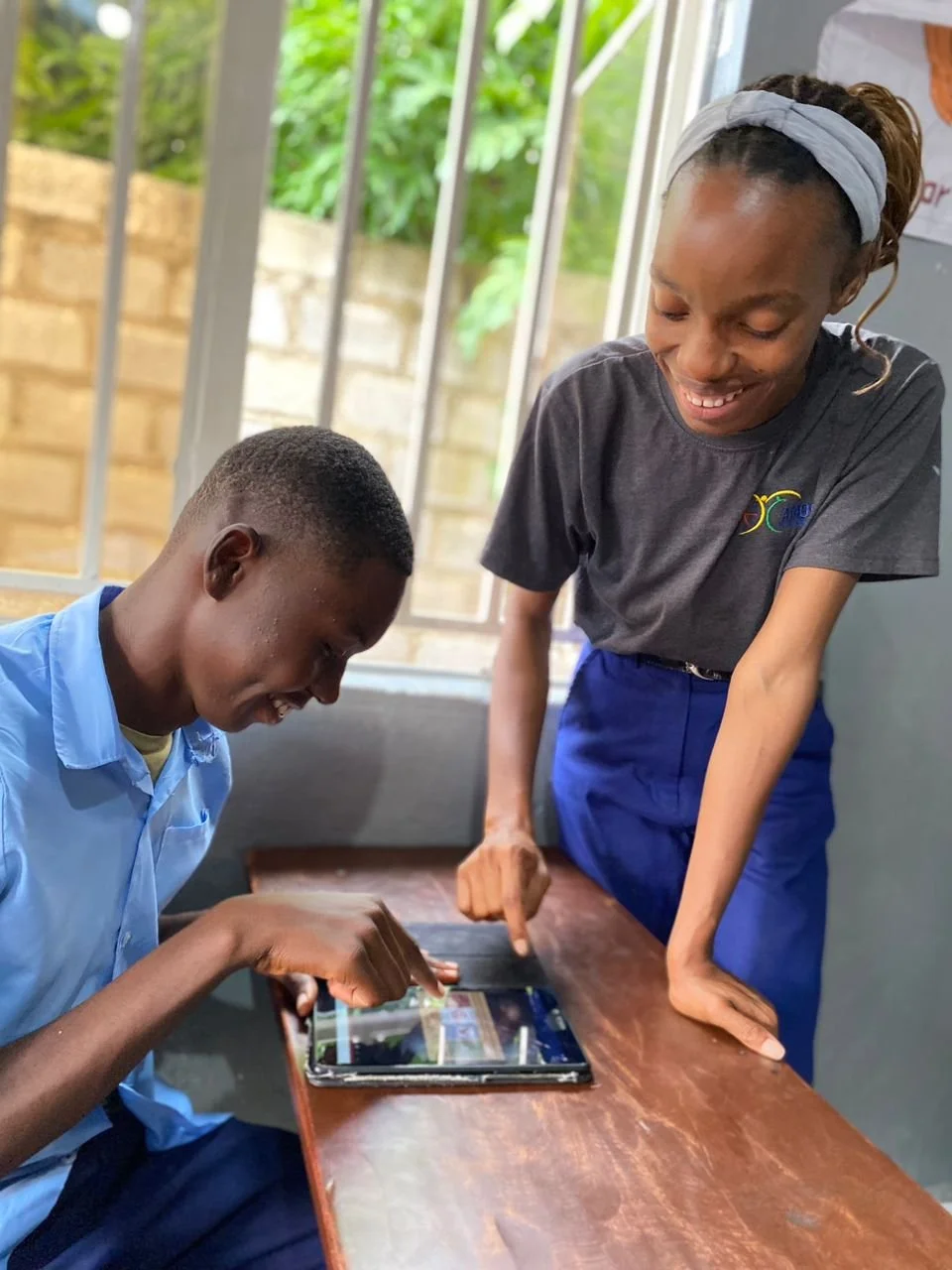
Read for Rose student accesses visual and interactive content tailored to their individual learning needs.
Phase Two: Building on What Works
After a successful pilot, Phase 2 is bringing meaningful improvement this year and making room for more students to be exposed to digital literacy. Feedback from students and facilitators from Phase 1 shaped how the program will continue to be delivered, ensuring it remains responsive to the needs of every learner. Even in the face of challenges, such as sharing devices, headphone quality issues, and slow charging affecting session readiness, the program's impact never wavered.
But perhaps the most significant development in Phase 2 was the decision to expand the program to include students in our Read for Rose Special Education Program.
Expanding Inclusion: Read for Rose Joins the Journey
"I believed tablets could work because many students in the Read for Rose Special Education Program respond better to visual, interactive, and self-paced learning than to traditional print-based methods," explained Febby Choombe, Director of Special Education. "Tablets offer flexibility, students can repeat activities, learn through audio and visuals, and engage at their own pace without pressure."
The content was carefully adapted, language was simplified, tasks were broken into manageable steps, and students were encouraged to navigate independently, building confidence alongside knowledge.
The impact was profound. Janet, a Grade 7 Read for Rose student who is Deaf, described what the tablet meant to her:
“I enjoy learning with the tablet, it’s a big privilege for me. The tablet has pictures and videos that are easy to use. My school performance has also improved, and the tablet also has an app for sign language, which helps me increase my vocabulary.”
For Martin, also in Grade 7 and hard of hearing, the tablet opened doors that traditional learning had kept closed. "I feel more confident because I have the freedom to use the tablet at my own pace. The headphones offer a safe space for me to learn," he shared. "I have even learned how to type, something I never knew before."
Parents noticed the difference, too.
“My child always looks forward to coming to the Read for Rose Special Education Program, often even more than attending her regular school.”
The Road Ahead
Students with disabilities are accessing learning in ways never before possible. The Tablets for Kids Pilot Program has proven that when the right tools meet the right support, every child can thrive, regardless of their background, ability, or learning style.
In 2026, AYC expanded the program from 38 to 83 students, adding 30 new Young Learners and 15 children with disabilities from the Read for Rose Special Education Program. We are expanding digital content to cover more grade levels and aim to translate Mwabu content into Zambian Sign Language, ensuring that no student is left behind.
"Seeing a student solve a problem on a screen for the first time and realizing they are the ones in control of that technology is the ultimate moment for me," Ceasar reflected.
From a pilot program to a life-changing initiative, the digital literacy program is doing more than closing the digital gap—it is redefining what inclusive, personalized education looks like in Kafue, and proving that when we invest in every child, the possibilities are limitless
