
Menstrual Health Awareness Month: A Mother, Daughter, and the Power of Menstrual Health Education

By Annabel Mumba
Annabel Mumba is AYC’s Donor Relations Coordinator. She is a Scholarship Fund recipient, and a graduate of Mulungushi University with a Bachelor of Arts in Communications (Journalism), and also one of our Success Stories.
Co-written by Pamela O’Brien, African Education Program’s Development Director, who is mentoring Annabel.
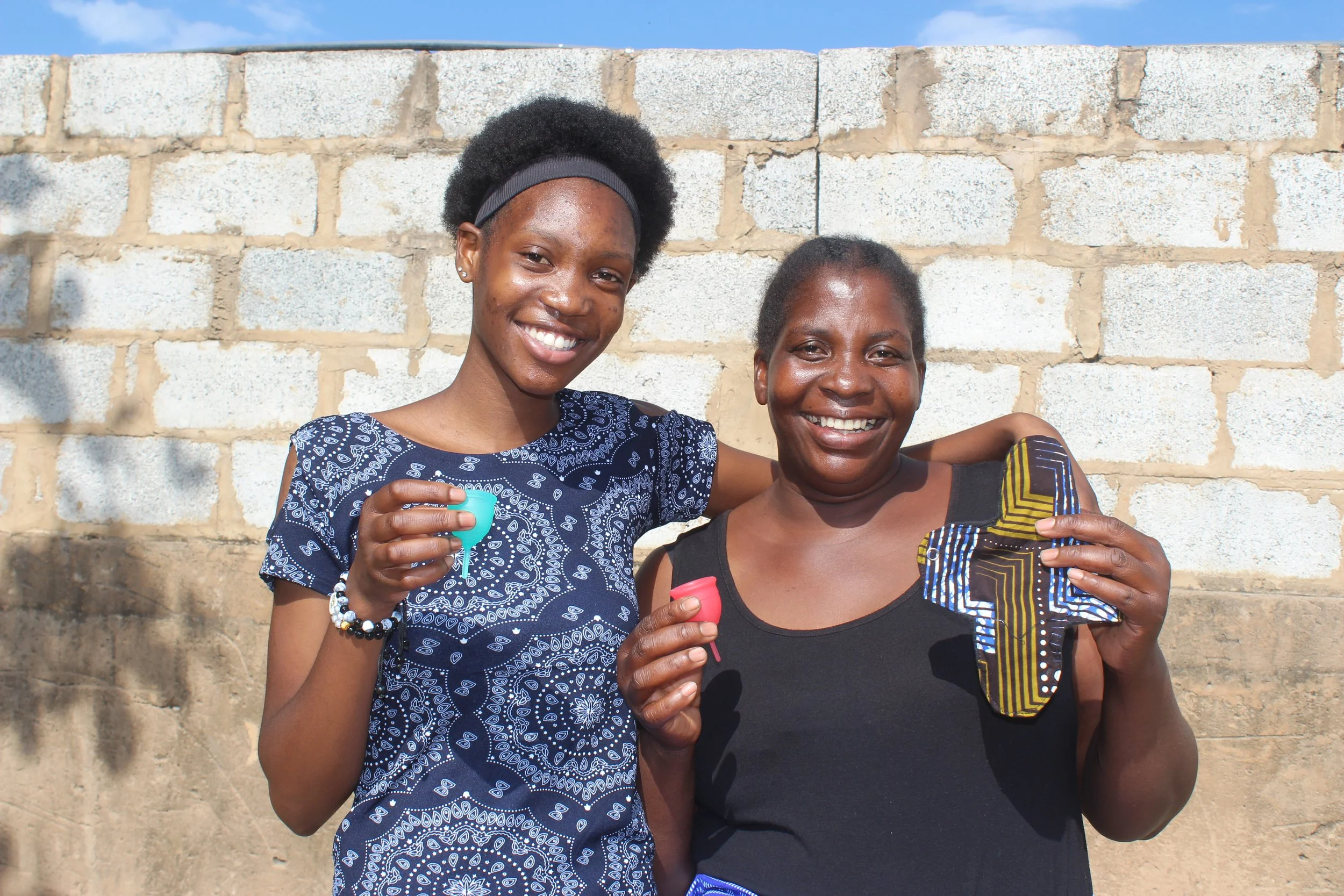
Margret and her mother are all smiles with their products.
Margret was fourteen years old when her period finally came.
She had been waiting for it. All her friends had already started theirs. They whispered to each other, shared stories, and seemed to belong to a circle Margret did not yet feel part of. In many African communities, starting your period is seen as a significant moment, a transition into womanhood. When it finally arrived, she ran to her mother with joy.
Her mother sat her down and gave her lessons on how to stay clean. She warned her to stay away from boys. She shared the traditions, the things a girl must do and must not do when her body begins to change. It was more than many mothers offer. And yet, there were still so many things left unsaid.
This is the story of Margret and her mother. A story about what happens when education, access, and open conversation enter a home, and how two women, one generation apart, found dignity, confidence, and each other through the menstrual health program at Amos Youth Centre.
Before Margret joined the Amos Youth Centre (AYC), managing her period was something she navigated largely on her own. She used disposable pads whenever her mother could afford them. In the months when money was tight, she relied on cloth, just as generations of girls before her had done.
“I used cloth for months when my mother could not afford to buy pads for me.”
There were days she had to leave school early because her period had started unexpectedly, and she had nothing to use. She would walk home sad and unprepared, missing lessons that she could not afford to miss.
"I would have to leave school if my period started and I was not prepared," she said.
It was not just the inconvenience. It was the anxiety of never quite knowing if today would be one of those days. The constant low hum of worry that sits in the background of every girl who has ever had to manage her period without the right support.
Her mother carried her own quiet worries, too. Disposable pads were expensive; disposable pads cost about K20, which is $1 USD, a price that is still unaffordable for many families. Her mother, who sells vegetables by the roadside, had no stable income. Margret’s mother did her best to talk to her daughters, breaking with the tradition of her own upbringing where menstruation was a secret passed only from aunties to nieces, never from mothers to daughters. She knew there were gaps she could not fill alone.
"During my time growing up, I was afraid to tell my mother," Margret's mother shared. "I had older friends who taught me what to do. I hid it from my mother because we were told that no one should know. It was a secret. As per tradition, we were not supposed to have these conversations with our mothers."
She had broken that tradition for her own daughters. But she was about to learn that there was still so much more to know.

Margret appreciates having a choice of products at AYC.
The Products That Changed Everything
In Grade 10, two years ago, Margret received a menstrual cup and a set of reusable menstrual pads from Amos Youth Centre.
For a girl whose mother could not always afford disposable pads, the impact was immediate and profound.
"Having these products has been very helpful," Margret said. "Disposable pads are very costly for my mother, and knowing that she does not work, having the reusable pads has really helped me to not worry about where to get money to buy disposable pads."
She tried both products. The reusable pads became her preference: they were comfortable, reliable, and entirely her own.
"I prefer the reusable pads because they are easy for me to change and I am most comfortable using them," she said.
She no longer has to leave school early and use a cloth as a last resort.
When Margret's mother was invited to attend the menstrual health training for parents at AYC, she came with an open mind and a willingness to learn. She had already done more than most; she had talked openly with her daughters about their bodies, drawing on knowledge from her church and her own determination to do better than the generation before her.
During the session, she was introduced to the menstrual cup, and with curiosity, she asked to try it. Involving the mother in this important conversation was vital for the success of AYC’s Reproductive Health Access Initiative.
"When I saw the cup, I was worried," she admitted with honesty. "I was worried about how my daughter would be able to use it, especially since she was still a young girl. I was worried that it would break her virginity."
Margret's mother's fear was a common one shared by many mothers across Zambia, rooted not in ignorance but in a deep, protective love for their daughters. The training addressed those fears directly, gently, and with care.
“The cup has really helped me save money because I have not bought pads in the last two years. It is also more comfortable for me than pads.”
The woman who had once hidden her own period from her mother is now one of the cup's most enthusiastic advocates in her community. "I highly recommend the cup because it is so user-friendly. Easy to use, it does not have chemicals to cause issues for women. It is also cost-effective."
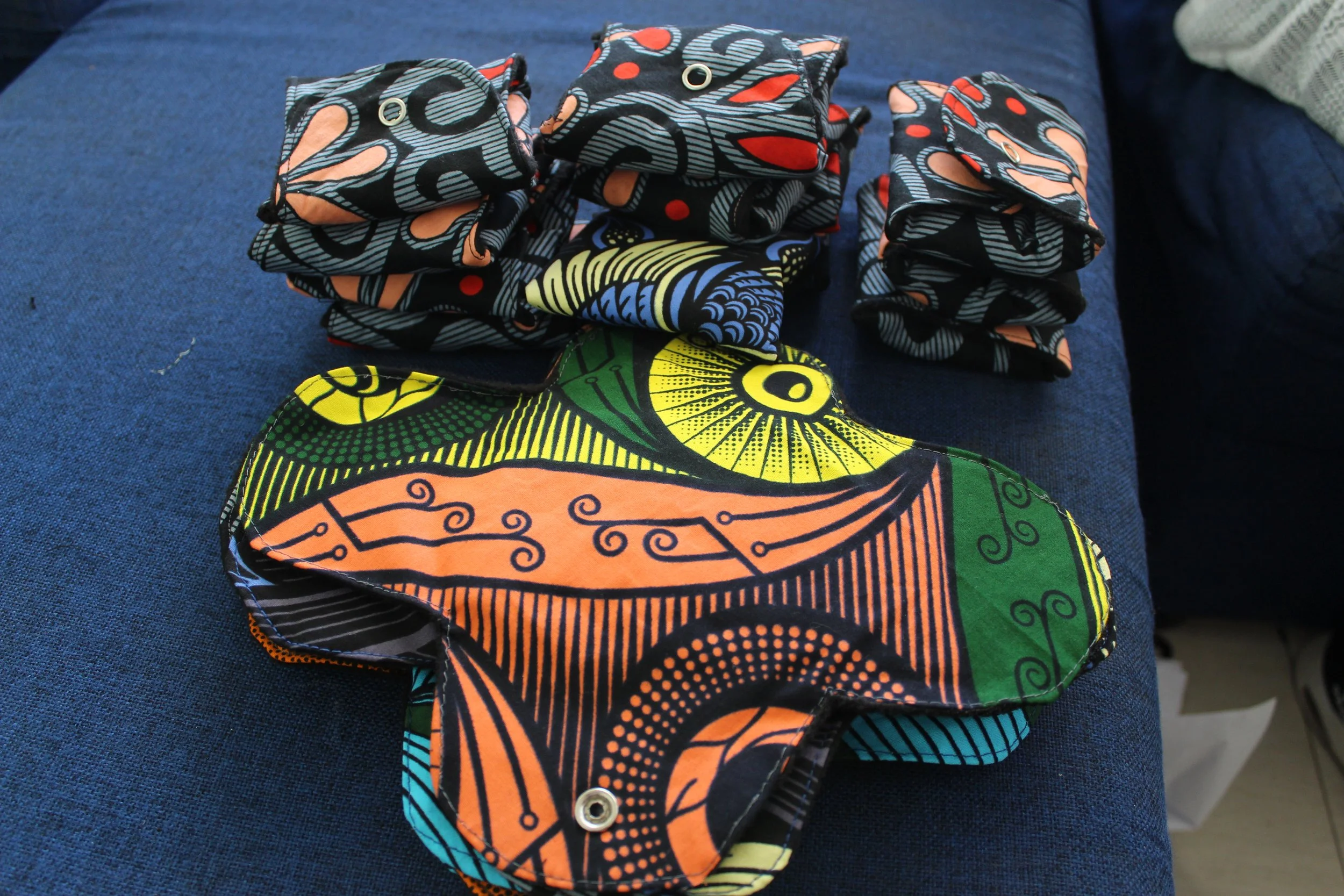
Reusable menstrual pads are created in local chitenge fabrics.
Beyond the products, what AYC gave Margret was something equally valuable; she gained understanding. Through the menstrual health education sessions, she learned how her body works. She learned about hygiene, about self-care, about what it means to take care of herself truly.
"My confidence has been boosted," she shared. "I was not comfortable sharing my worries and my concerns with my friends because I had low self-esteem. But after learning, I became very confident.”
She feels differently about her body now. She carries herself differently. She is, as she puts it simply and beautifully, comfortable.
"I feel very good and comfortable about my body," she said.
The education also changed the conversations at home. Both Margret and her mother attended sessions, and the shared knowledge built something between them that goes beyond products and hygiene tips.
"The training helped us become better and build a better relationship with each other because we both have the same knowledge," her mother explained.
And the ripple effect continues. Margret's twelve-year-old sister, who attends AYC’s Young Learners Program, has already begun attending the sessions. She is learning about her body before her period even begins, armed with the knowledge and confidence that neither her mother nor her sister had at her age.
“I am glad that these classes have even been exposed to my twelve-year-old daughter, who has learned about her period and what to expect.”
Margret's story is not just about a menstrual cup or a set of reusable pads; it is about what access to education and the right products can unlock in a girl and in a family.

Girls who attend AYC have access to reusable menstrual cups, pads and period underwear.
It is about a girl who used to leave school early and now stays. A mother who once learned in secret from older friends and now talks openly with her daughters. A twelve-year-old who will enter her first period already knowing, prepared, confident, and already seen.
This is what Menstrual Health Awareness Month is about. Not just products or education. But the quiet, powerful, intergenerational transformation that happens when girls and women are given what they deserve.
Period poverty remains a reality for millions of girls across Zambia and the continent. But in homes like Margret's, something is changing. One conversation at a time. One product at a time. One generation at a time.