By Annabel Mumba
Annabel Mumba is AYC’s Donor Relations Coordinator. She is a Scholarship Fund recipient, and a graduate of Mulungushi University with a Bachelor of Arts in Communications (Journalism), and also one of our Success Stories.
Co-written by Pamela O’Brien, African Education Program’s Development Director, who is mentoring Annabel.
A garden can be much more than a place where vegetables grow. It can become a classroom, a source of fresh food, and a space where young people discover skills that can benefit their families and communities.
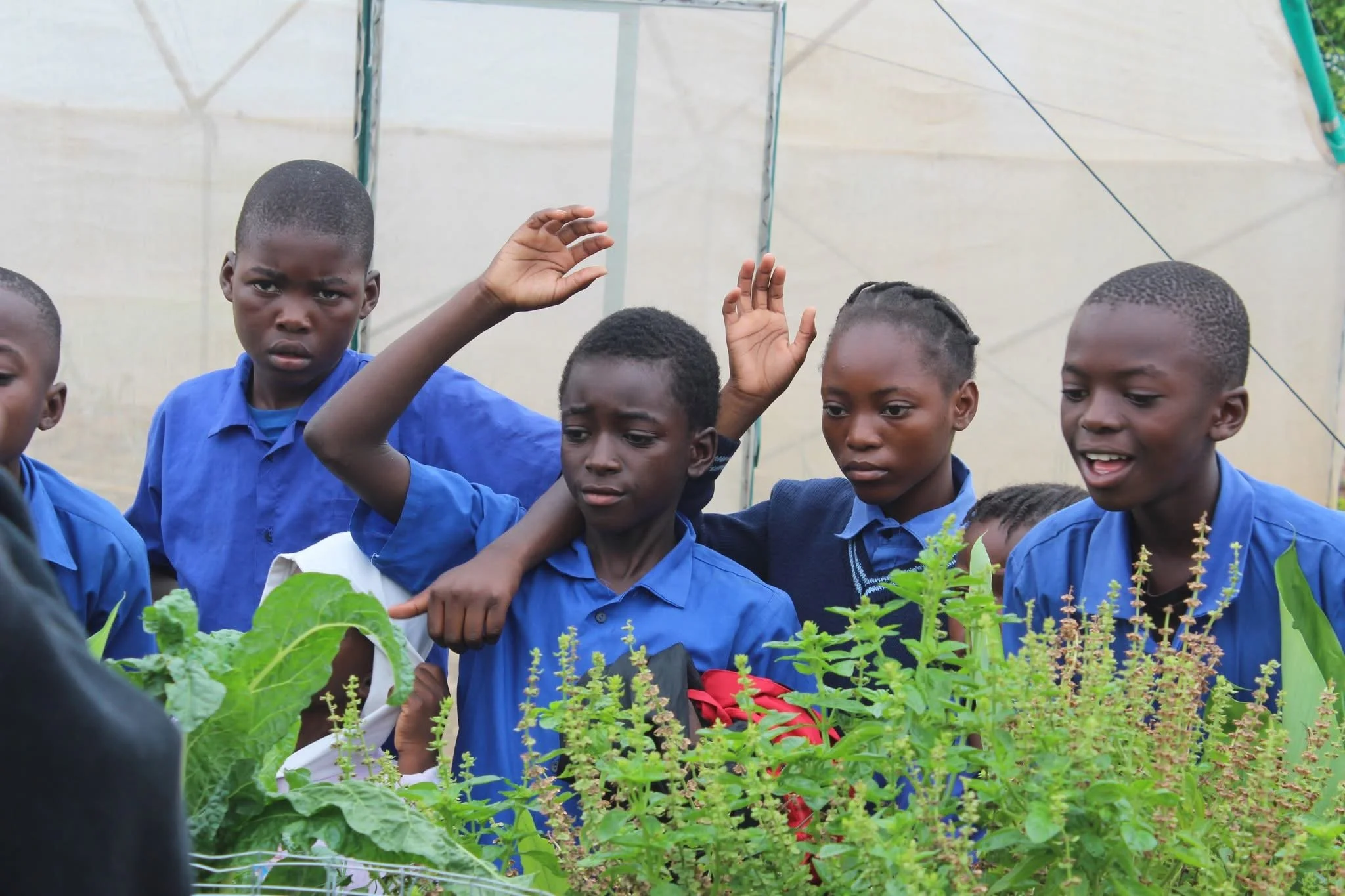
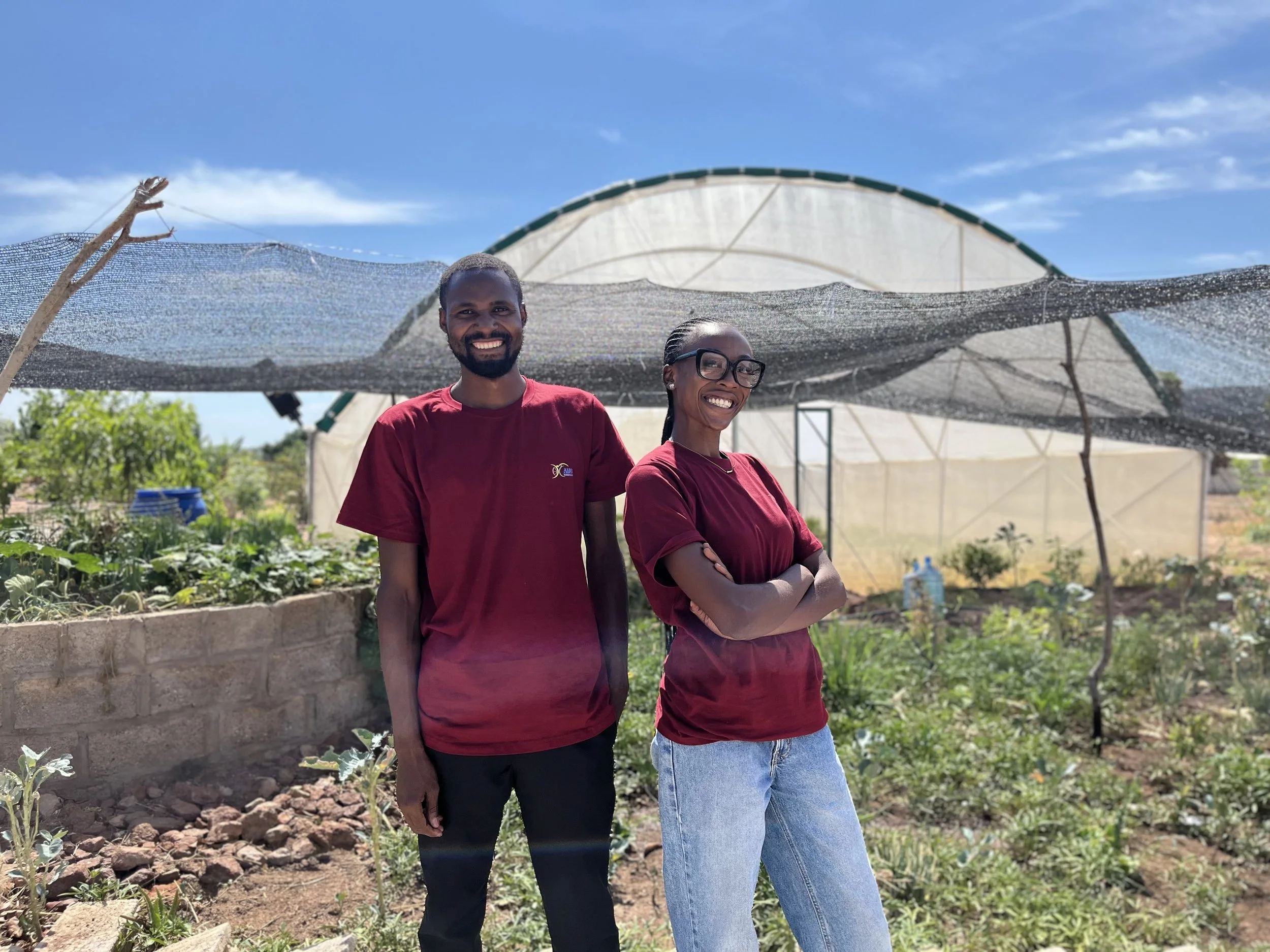
At Amos Youth Centre (AYC), the Urban Farming & Permaculture Learning Space is helping students discover these possibilities. Through the weekly Gardening Club, students gain practical experience in growing food, making compost, and using available resources sustainably. More importantly, they are learning that the knowledge they gain at AYC can extend beyond the learning space and into their homes.
Learning Skills that Grow Beyond the Garden
The Gardening Club aims to equip children and young people with valuable urban gardening skills. By learning how to grow their own food, participants can improve household food security, reduce the cost of buying vegetables and contribute to more sustainable communities.
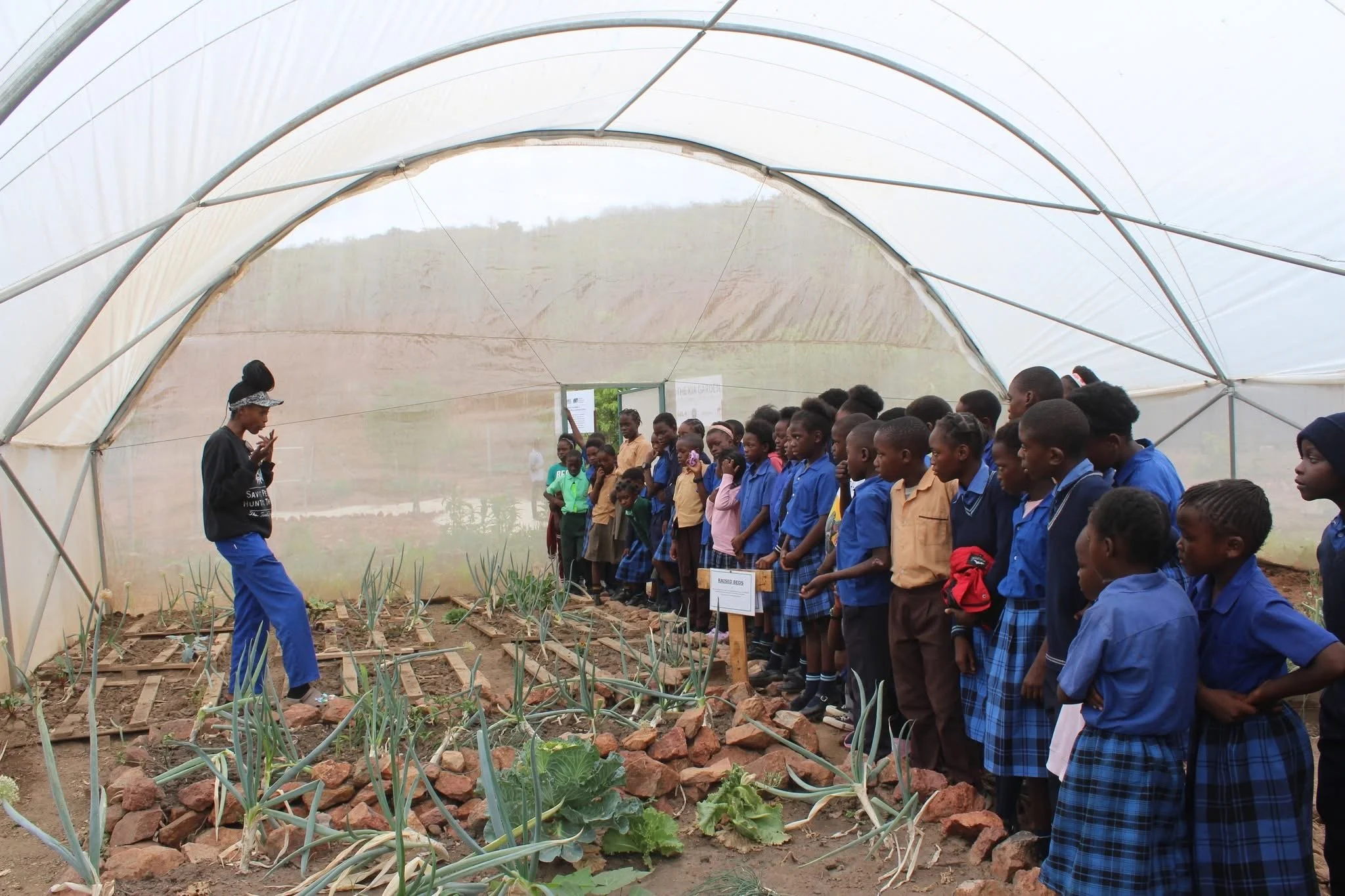
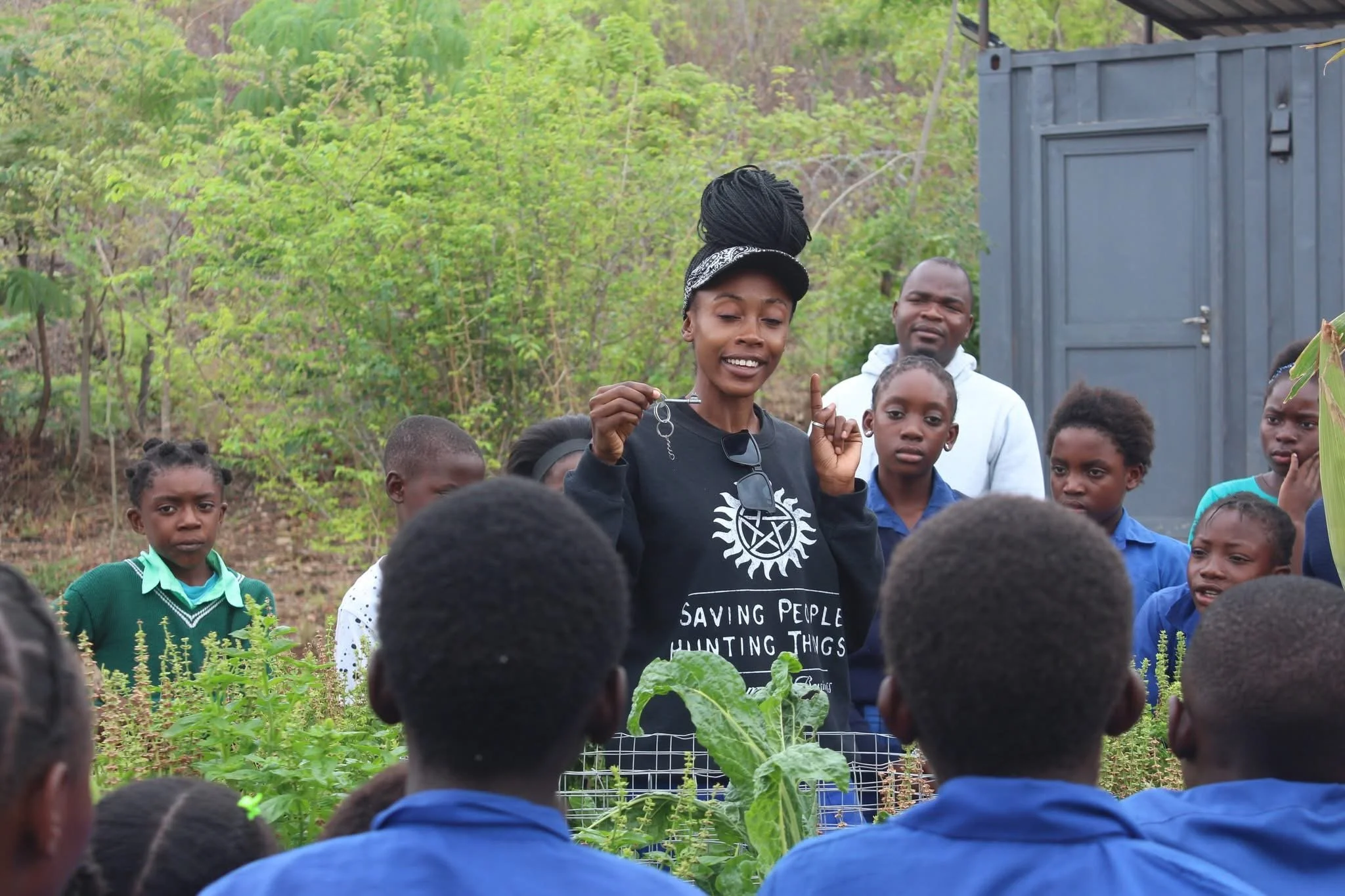
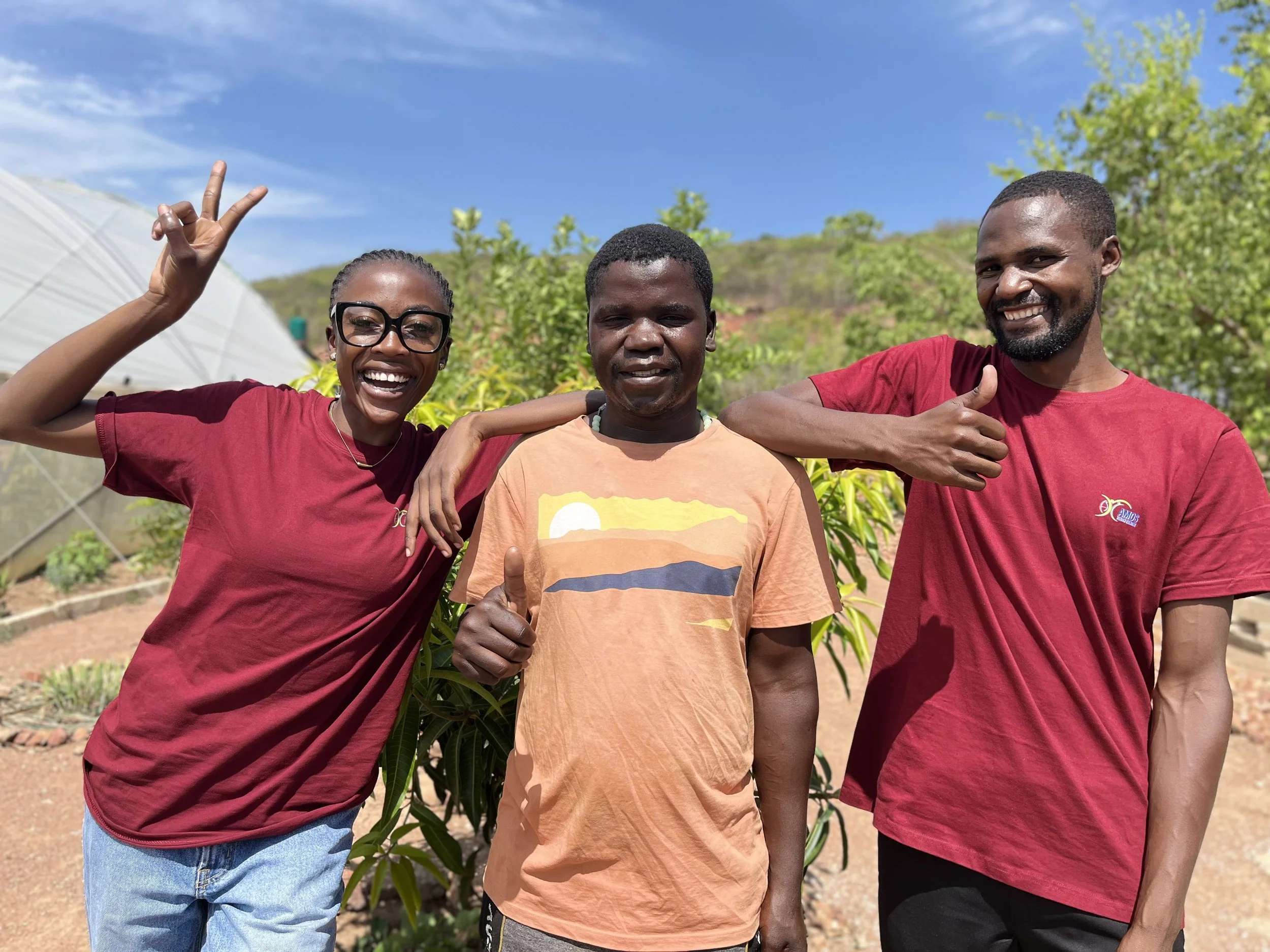
Namatama holds a class for AYC Young Learners during a Gardening Club session.
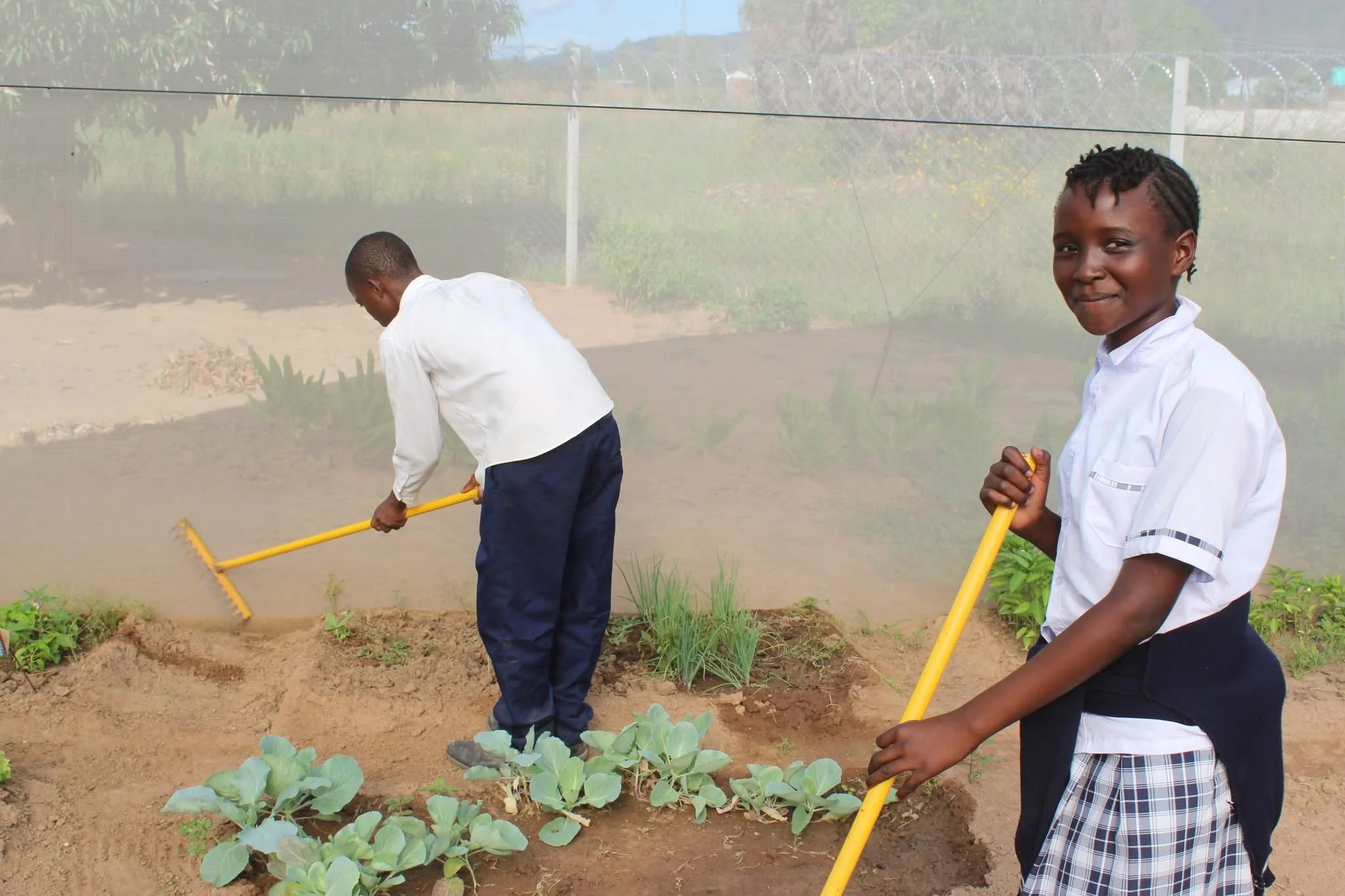
The Urban Farming & Permaculture Learning Space team teaches students how to grow food in small spaces and turn food scraps and garden waste into compost.
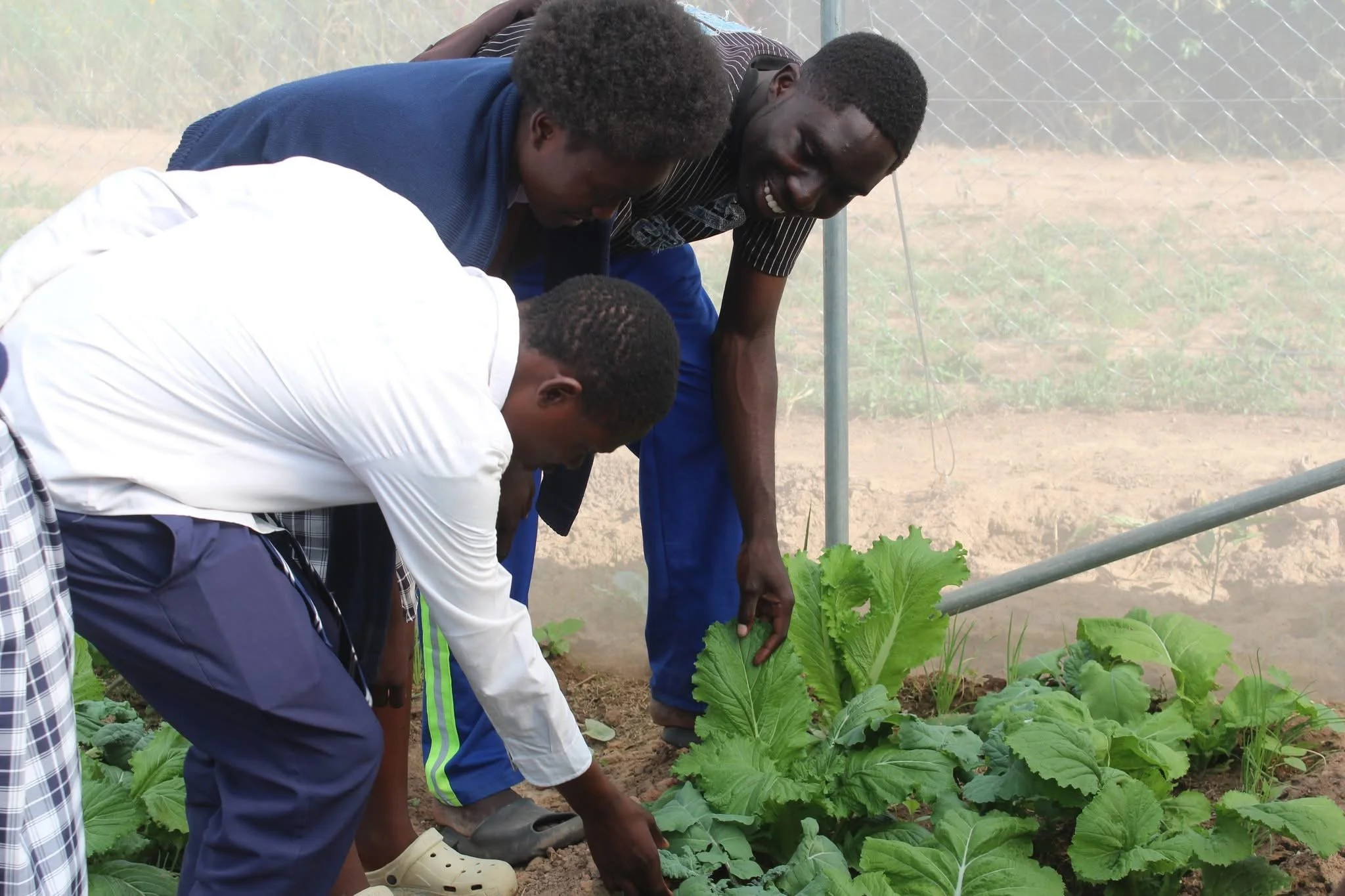
Students learn both the practical and theoretical aspects of gardening, from understanding gardening terminology and preparing planting spaces to planting, harvesting and producing compost.
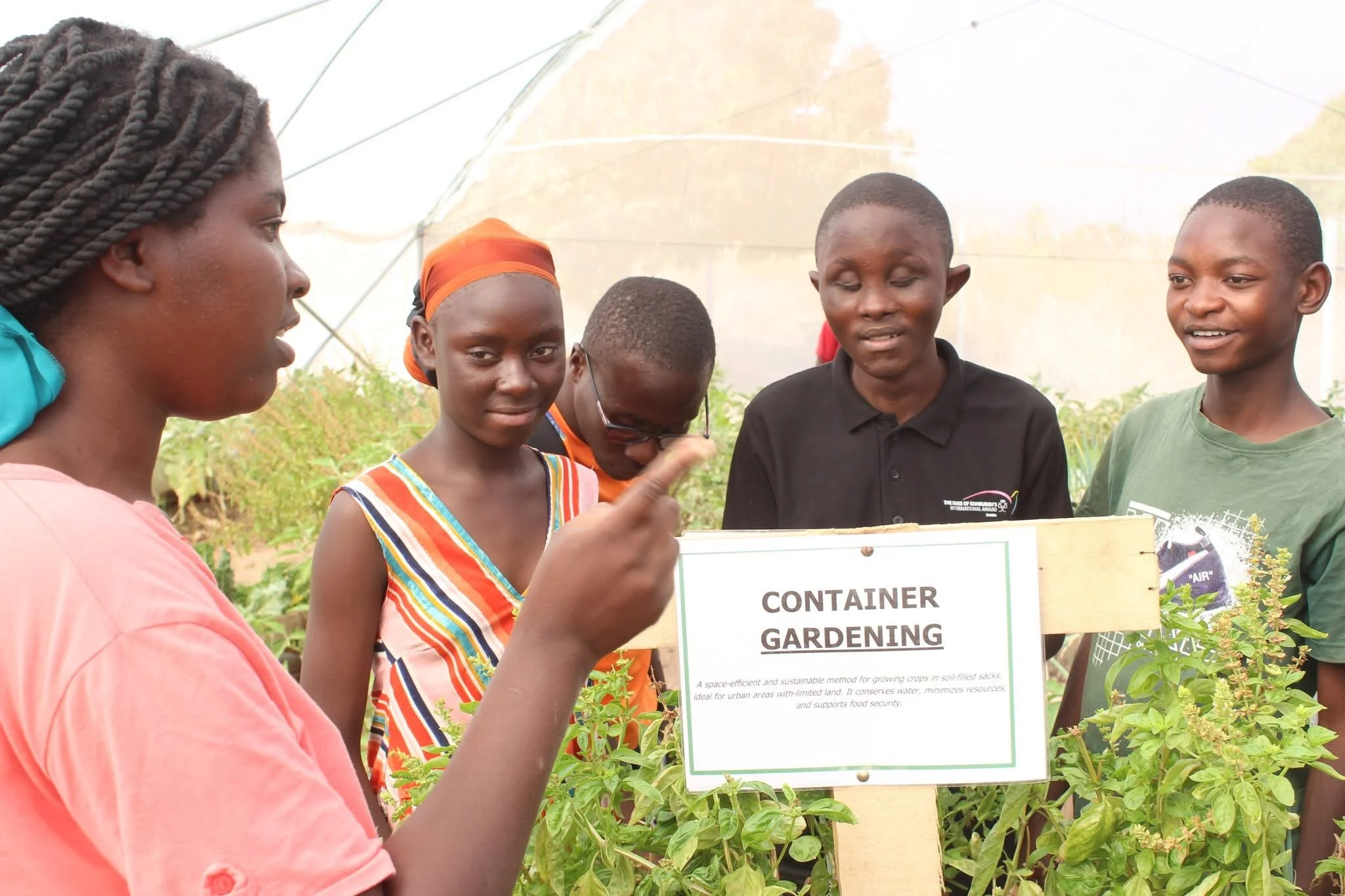
“During the sessions, they are introduced to different gardening methods suited to limited spaces, including keyhole gardens, raised beds and container gardening. We also teach them how to make natural organic pesticides and prepare fertiliser using banana peels,” shared Namatama Mwauluka, the Project Coordinator for the Urban Farming & Permaculture Learning Space.
The Urban Farming & Permaculture Learning Space grows a variety of vegetables and herbs, including mustard, kale, Chinese cabbage, cabbage, chilli pepper, mint, basil, onions, eggplant and spinach. It also features an orchard with fruit trees such as oranges, mangoes, pomegranates and passion fruit. This is a living garden for the students to practice and replicate at their homes.
So far, 85 students are participating in the Gardening Club, including learners from AYC's Read for Rose Special Education Programme. These experiences give students a chance to learn by doing, build practical skills, and understand how sustainable food production works in different settings.
From the Urban Farming & Permaculture Learning Space to the Family Garden
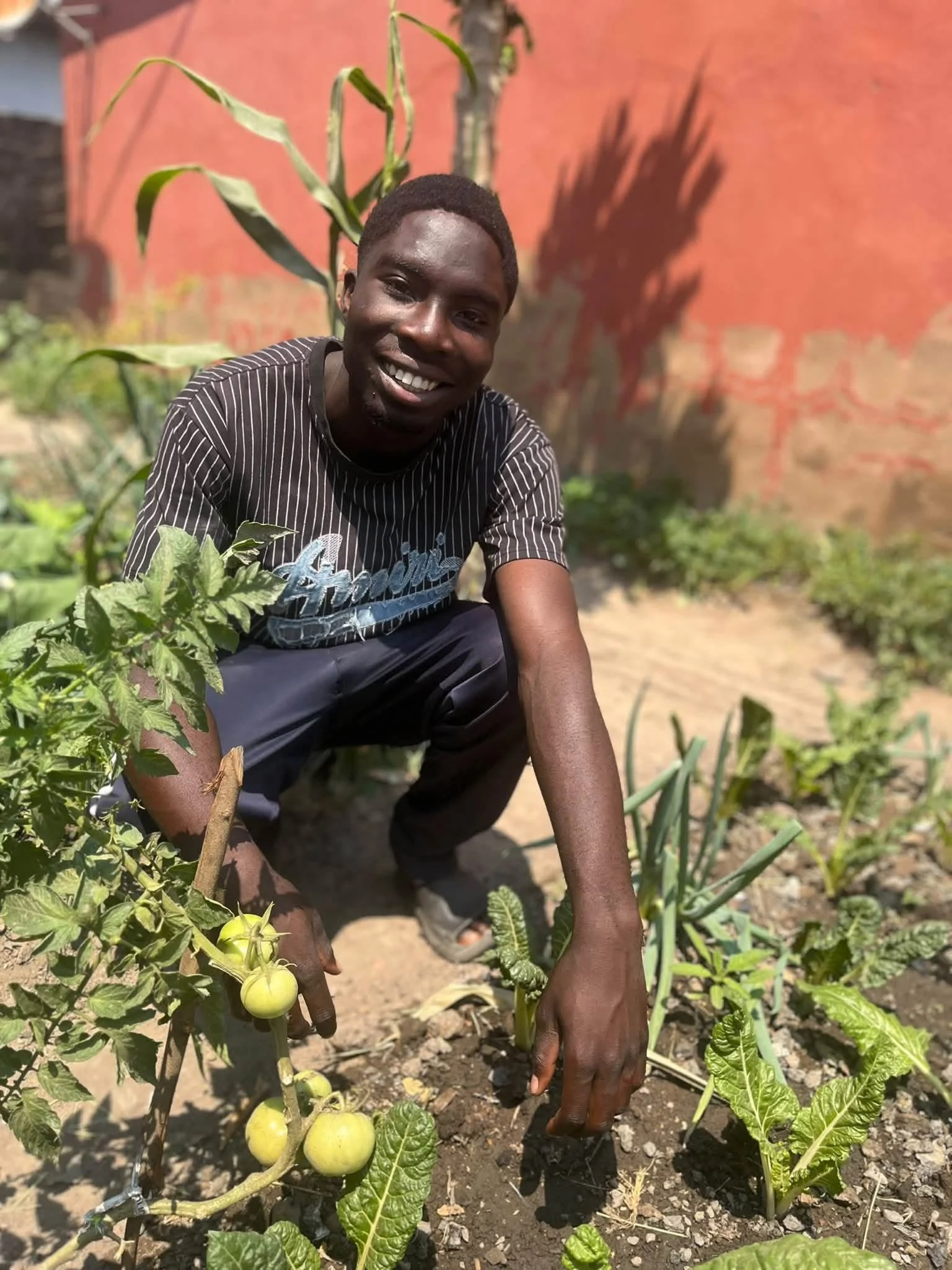
Mapalo proudly shows off his home garden.
For AYC, the impact of the Gardening Club should not end when students leave the Urban Farming & Permaculture Learning Space. The home garden initiative encourages them to apply what they have learned at AYC and share their knowledge with family members, neighbours and their wider communities.
More than 20 student home gardens established following the pilot of the Urban Farming & Permaculture Learning Space in 2025 are still being maintained, showing how the skills gained through the programme can continue to be put into practice.
Joseph, a Grade 5 student, is one of the learners who has taken this knowledge home.
After seeing the garden at AYC, Joseph was inspired to start one of his own. Through the Gardening Club, he has learned about different gardening methods, including raised beds, keyhole gardens and container gardening. His favourite is the keyhole garden because, as he explains, it is unique. Keyhole gardens use far less water than open beds and are watered through a central compost basket using greywater from rain.
At home, Joseph grows kale, Chinese cabbage, onions and cabbage with the help of his brothers. Their garden has become a practical source of fresh vegetables for the family.
"Instead of buying vegetables, we can easily pick from the garden," he shares.
Like many gardeners, Joseph has also encountered challenges with pests. However, he has been learning how to manage them. Beyond the vegetables, he says his favourite lesson from gardening is patience.
“My favourite thing about gardening is that it has taught me patience; I have learnt to wait to be able to see results.”
His advice to another student who would like to start a home garden is simple: "Be patient and let it grow."
Another student, Blessings, has also come to appreciate the value of growing food at home. She has learned that a garden can provide food even when money is limited.
"When you don't have money, you can always have food from your garden," she explains.
In her garden, she grows kale, sweet potato leaves, cassava leaves, and onions. What she enjoys most is having fresh vegetables available whenever they are needed.
These experiences show how gardening can become more than an activity at AYC. It can give students practical knowledge they can use to support their households and encourage others to grow their own food.
Turning Organic Waste into Something Valuable
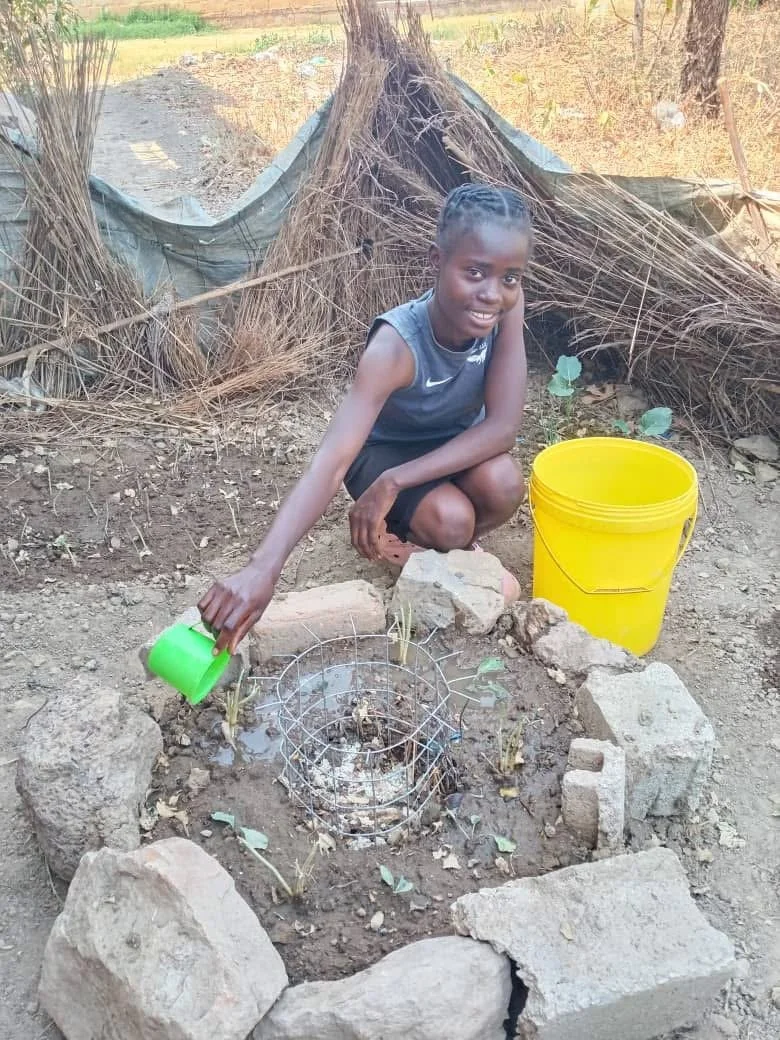
Mildred learned how to compost to support the keyhole garden at her home.
An important part of the programme is teaching students how to make use of resources that might otherwise be thrown away.
Composting combines green matter, such as fresh leaves and vegetable scraps, with brown matter, including twigs and dry leaves. Other organic materials, such as leftover nshima and grass clippings, are also added. After approximately two months, the compost is ready to enrich the soil and support plant growth.
To date, the garden has produced more than 1,000 kilograms of compost. The compost is used in place of inorganic fertilizers that can prove to be harmful to the soil after prolonged use.
By learning how to turn organic waste into a useful resource, students develop a better understanding of waste management and environmentally responsible practices. They also gain skills they can apply in their own gardens and communities.
Growing Food and Supporting AYC's Nutrition Programme
The Urban Farming & Permaculture Learning Space also plays a role in AYC's wider efforts to promote food security and nutrition.

The daily hot meals at the Nutrition Programme are served with a protein, starch and a vegetable.
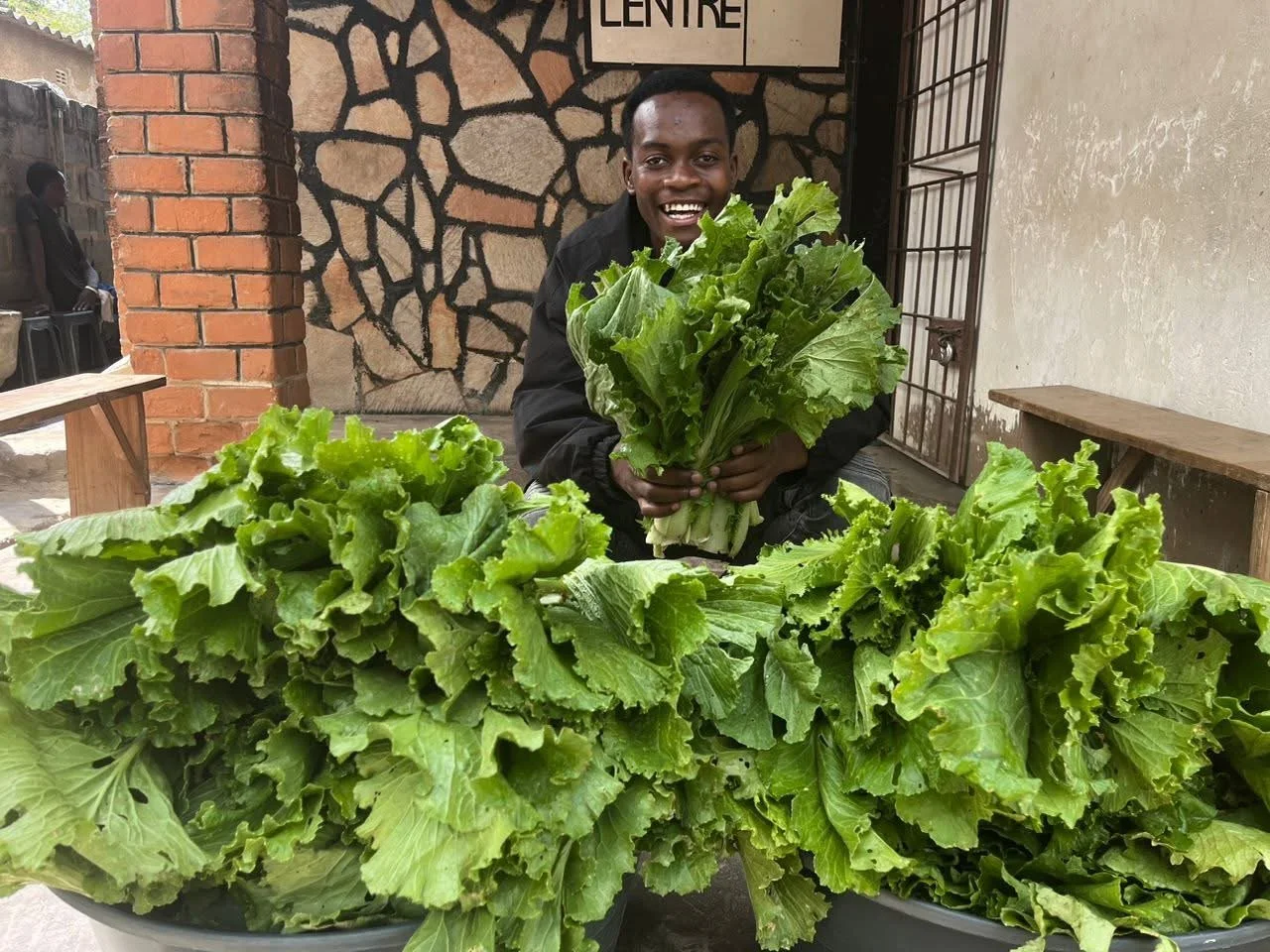
Through its harvests, the garden has produced vegetables to help feed more than 350 children and youth who attend AYC’s Learning & Leadership Centre and take part in the Nutrition Programme. AYC's goal is to establish a consistent supply of fresh produce for the kitchens serving both the Learning & Leadership Centre and Read for Rose Special Education Programme.
This connection between growing food and preparing meals helps students understand that gardening can contribute to everyday needs while reducing reliance on purchased vegetables.
The vision is to strengthen this contribution further, with the garden eventually supplying vegetables consistently to AYC's Nutrition Programme.
Looking Towards a More Sustainable Future
Like any gardening project, maintaining the space comes with challenges. Pest infestations, in particular, can be difficult to control using organic methods. However, these challenges also provide opportunities for continued learning and problem-solving.
Looking ahead, the team hopes to see students take greater ownership of their gardens and teach their families how to grow more vegetables and produce compost with minimal supervision. Another important goal is to develop the garden's capacity at the Urban Farming & Permaculture Learning Space to supply vegetables consistently to AYC's Nutrition Programme, while exploring opportunities for a social enterprise to generate income by supplying local markets and small business owners.
At AYC, the garden is growing more than vegetables. It is growing knowledge, patience, responsibility and a sense of possibility among the students who take part.