Celebrating Seven Years of The Read for Rose Special Education Program: A Dream That Became a Reality

By Annabel Mumba
Annabel Mumba is AYC’s Donor Relations Coordinator. She is a Scholarship Fund recipient, and a graduate of Mulungushi University with a Bachelor of Arts in Communications (Journalism), and also one of our Success Stories.
Co-written by Pamela O’Brien, African Education Program’s Development Director, who is mentoring Annabel.
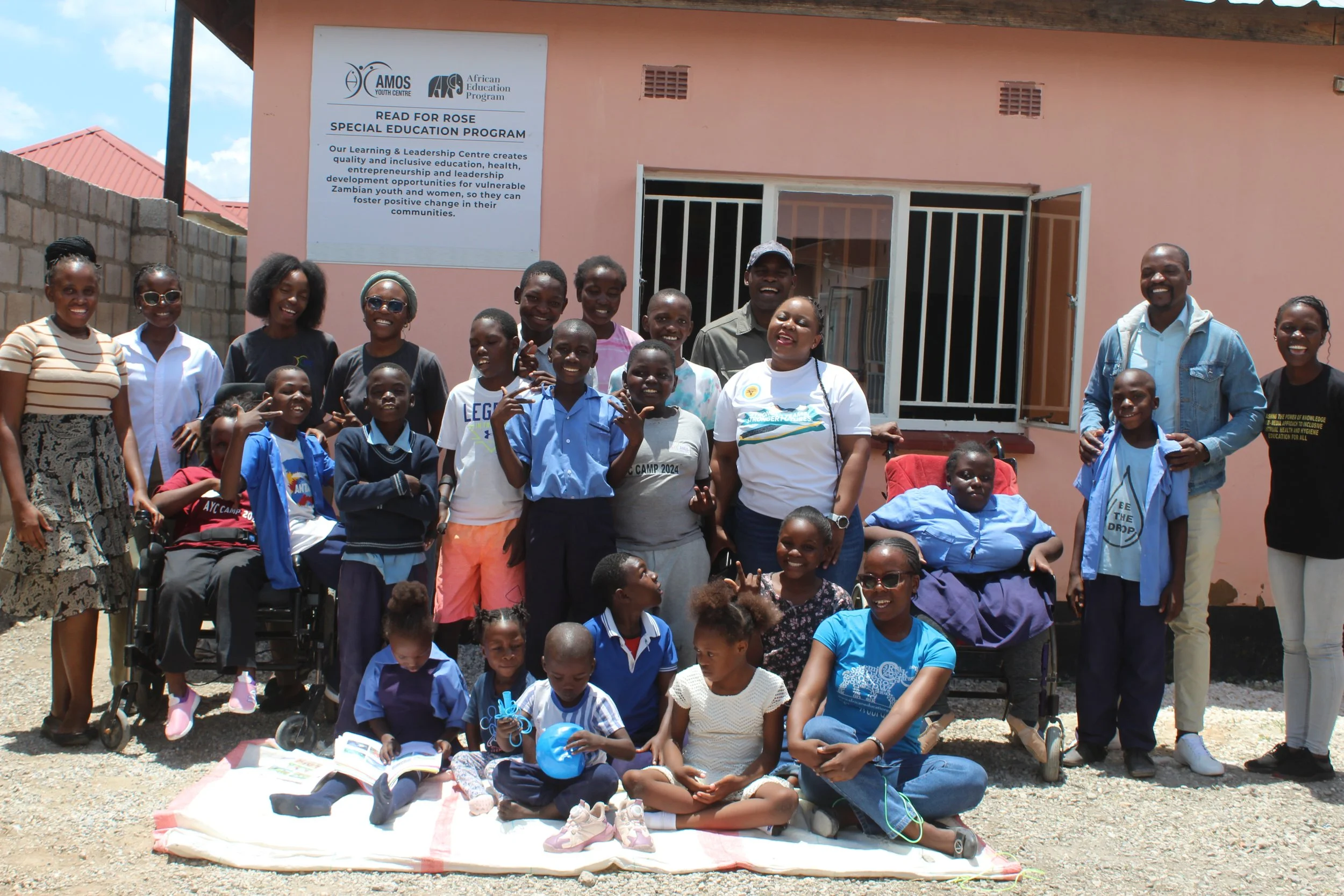
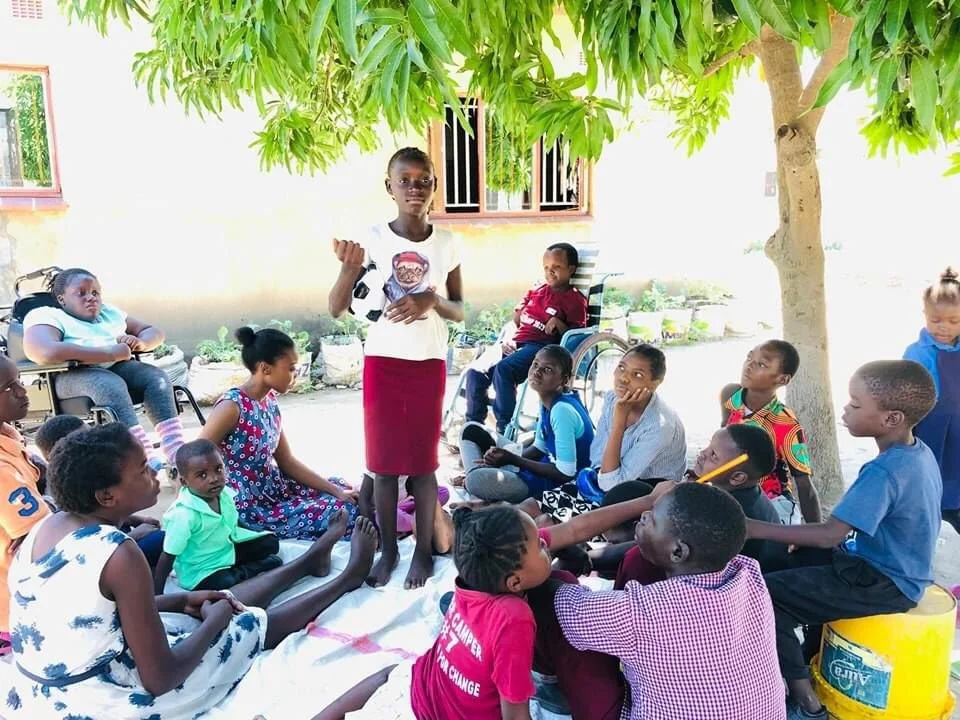
Read for Rose students gather for a photo.
The Read for Rose Special Education Program is celebrating 7 years of transformative growth and impact. This blog is a reflection of seven years ago, when Febby Choombe started this transformative program.
Today, Read for Rose serves 41 students with diverse learning needs, from hearing and visual impairments to autism, Down Syndrome, and physical disabilities. As the program marks its 7th anniversary, it celebrates not just its growth but the lives it has transformed along the way.
From a Dream to a Reality
Long before she earned her degree, Febby had a burning desire to help children with disabilities in her community. Through AYC programmes, Febby completed secondary school and obtained a Bachelor of Arts in Special Education from the University of Zambia. In 2017, she returned to the Amos Youth Centre team as a special education teacher and in 2019, started the Read for Rose Special Education Program. Today, she is the Director of Special Education.
When Febby returned to AYC as an alumna, she found a gap she could still not ignore: children with disabilities in Kafue who had no access to the specialised support they needed. Many were hidden at home, unseen and unheard. Others sat in classrooms that were not equipped to meet their learning needs, lacking specialised teachers, learning materials, and the tools necessary to reach every child.
“Opening a special education centre has always been a dream of mine. The passion to help children with disabilities was burning in me every single day.”
It was not an easy start. Febby remembers the fear and self-doubt of those early days. "I was scared that I was not ready, and I feared failure. I had a lot of what-ifs." But the need was too great to walk away from.
Febby started the Read for Rose Special Education Program with 14 students. Today, the program has expanded to include a team of six staff and 41 students, including six secondary school boarding students, with two students graduating from secondary school this year.
The impact extends beyond the students. Annie, who joined as a volunteer assistant teacher during a gap year after her secondary school graduation, found her calling at Read for Rose. She is now at Kwame Nkrumah University studying Special Education and is the Special Education Assistant.
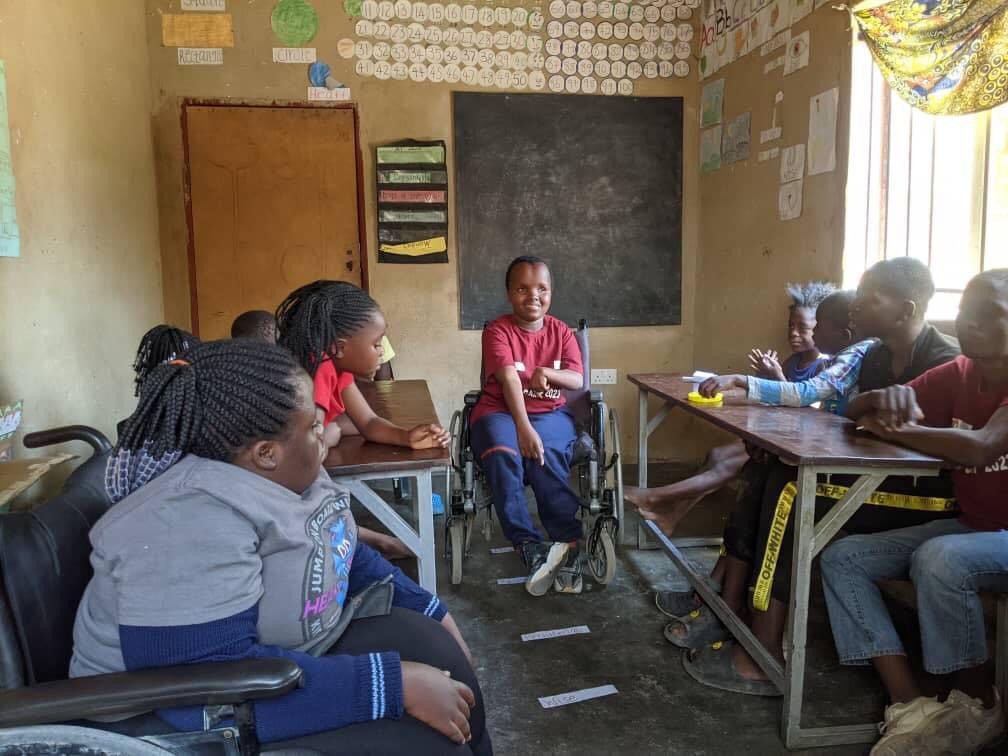
Small groups gather in the Read for Rose classroom for a daily lesson.
A Holistic Approach
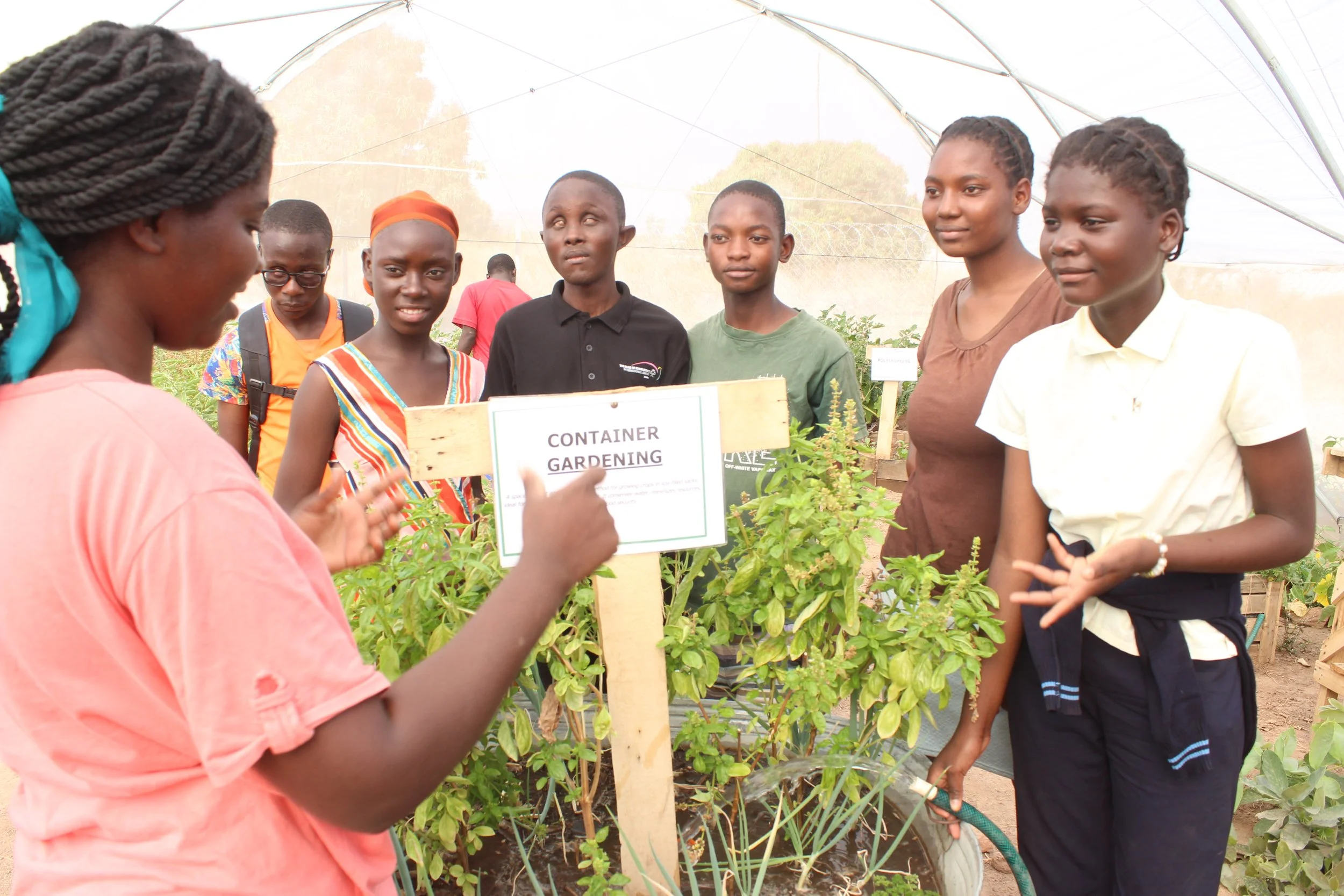
What makes Read for Rose different is its commitment to the whole child and the whole family. Every student receives an individualised learning plan designed around their unique strengths and needs. Beyond academics, students develop practical life skills through doormat knitting, gardening, and weekly entrepreneurship classes.
The support does not stop at the classroom door. Parents have access to Zambian Sign Language classes, monthly mental health sessions, child safeguarding training, and business training. A majority of the mothers at Read for Rose are single parents who depend on small businesses, selling at local markets or working as household maids, to provide for their children and families. AYC’s Women's Business Training equips them with the knowledge and skills to grow these existing businesses or start new ones, giving them a stronger foundation to survive and thrive. Over seven mothers have graduated from the Training and left with businesses of their own.
“We have a holistic program that caters not only to the children but also to the family. It is very important that parents are involved and taken care of, especially given the stigma that still exists in many communities.”
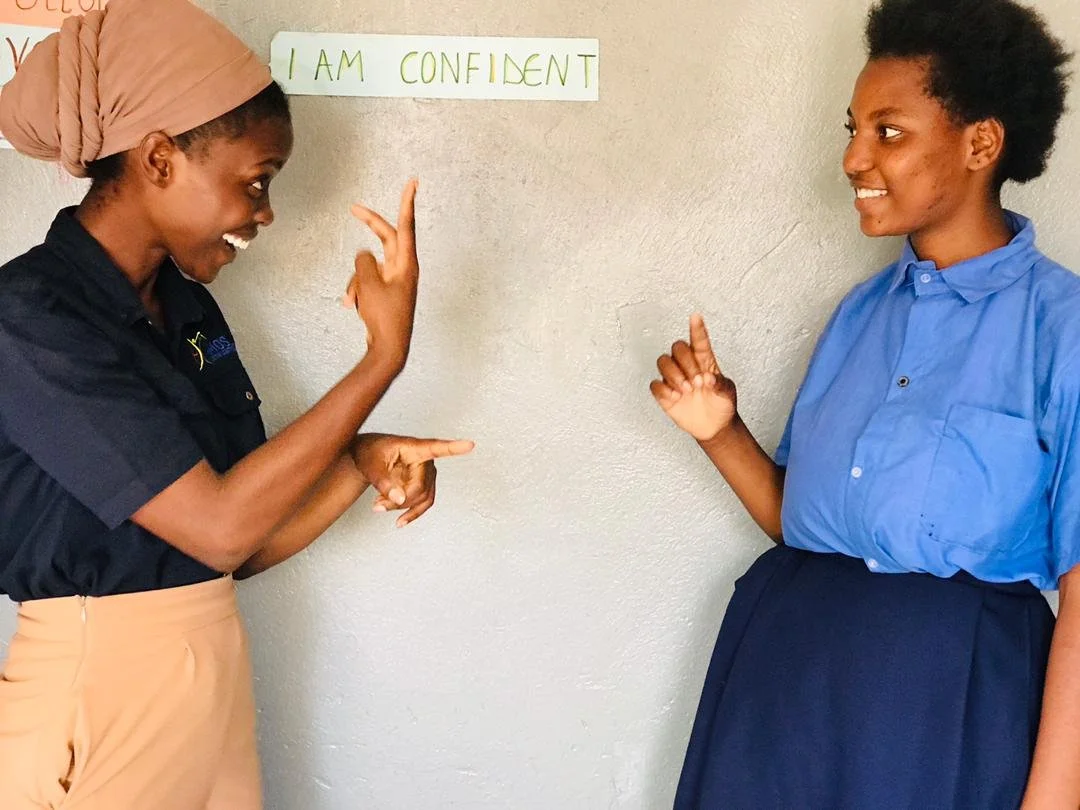
Febby communicates with Susan in sign language each day.
A Safe Space for Girls
One of Read for Rose's most impactful initiatives is the Menstrual Health & Hygiene Club. Many of the girls enrolled in the program did not know about puberty, menstrual health, or their rights. And, many parents did not know how to have those conversations with their children, especially across communication barriers.
The club covers puberty, menstrual hygiene, sexual and reproductive health, and abuse reporting. For girls with disabilities, this knowledge is not just educational; it is protective. Students have become confident, informed, and vocal about their rights. Some have reported abuse for the first time within the safety of the club.
"It has become their safe space," Febby shared. "A place with no judgement."
Amos Youth Centre’s work with their Reproductive Health Access Initiative also inspired the creation of My Period, Our Story, an inclusive storybook co-authored by AYC staff and youth ambassadors. The storybook is available in print, Braille, and audiovisual formats to ensure no one is left out and can now be found in local schools, health posts, and government departments across the region. In remote rural communities like Chiawa Chiefdom, where menstruation was once a topic left only for grandmothers and aunties, both girls and boys are now reading, learning, and owning their stories – thanks to AYC’s rural outreach.
Advocating Beyond the Classroom
Febby's commitment to children with disabilities does not end at the gates of AYC. She is a passionate advocate who seizes every opportunity to raise awareness about the work of Read for Rose and the rights of children with disabilities in Kafue and beyond.
Through AYC's partnership with the African Disability Collaborative, Febby has accessed online training in inclusive education, connecting with other organisations doing similar work and sharpening the way she supports her students. The SACODI Project, supported by the International Disability Alliance and implemented locally through Twatasha Disability and OVCs, has brought together all of the organisations working with persons with disabilities in Kafue, creating a network of referrals, shared knowledge, and collective advocacy at the national level.
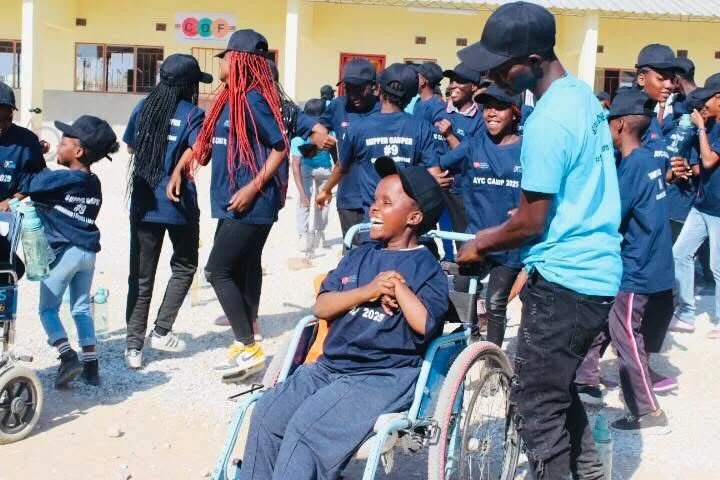
Since 2022, the partnership with Global Fund for Children has been a game-changer for AYC, providing grants that have helped scale up operations, purchase learning materials, and acquire assistive devices for students. This year, AYC will hold its first-ever Young Learners Literacy Camp, with 70 children participating, 20 of whom are children with disabilities.
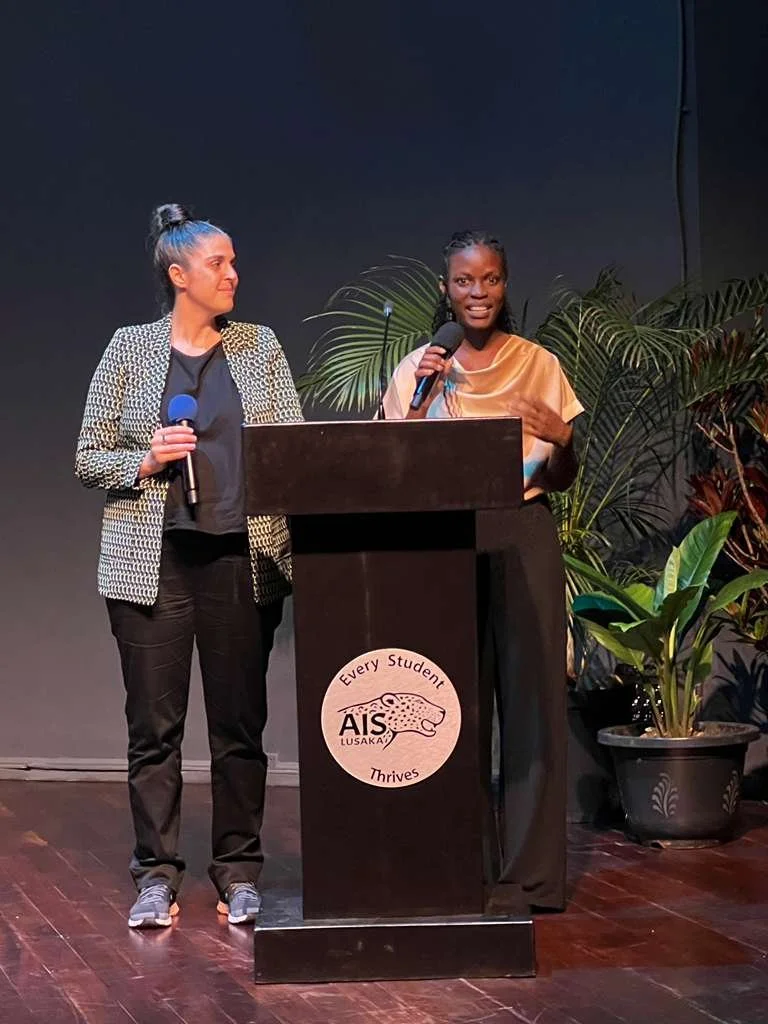
Most recently, Febby was invited to speak at the American International School (AISA) Global Issues Service Summit 2026, a moment that opened new doors for collaboration and partnership, and amplified the voice of children with disabilities on a global stage.
“Every child can learn and be seen. They can do all things like us, and we do not yet understand what they are truly capable of.”

Braille is taught to learners with visual impairments.
Looking Ahead
Seven years in, Febby's vision for the Read for Rose Special Education Program is bigger than ever. She hopes to see Read for Rose become a fully-fledged school, and one day, staffed by its own alumni, young people with disabilities who will return to shape the very program that shaped them.
Febby and her team are not oblivious to the challenges that students with disabilities face when transitioning to tertiary education. For students who may not follow the traditional academic path, the Read for Rose Special Program is planning to introduce new vocational skills programs, including metal fabrication, catering, tailoring, driving, and cosmetology – practical, income-generating skills that will open doors to independent and dignified lives. At Read for Rose, every student has potential, and the path to realising it simply looks different for each one.
“Looking back at the past seven years, I am happy that we started this ‘once a dream’ initiative. I never thought it would reach this far.”
Seven years ago, Febby asked where the children with disabilities go. The Read for Rose Education Program is the answer she built, one student, one family, one community at a time.