

By Annabel Mumba
Annabel Mumba is AYC’s Donor Relations Coordinator. She is a Scholarship Fund recipient, and a graduate of Mulungushi University with a Bachelor of Arts in Communications (Journalism), and also one of our Success Stories.
Co-written by Pamela O’Brien, African Education Program’s Development Director, who is mentoring Annabel.

Susan stands between Febby (l) and her mother — her two biggest champions.
Seven years ago, Susan began her journey at the Read for Rose Special Education Program. As a young girl with a hearing impairment, and due to the limited availability of special needs resources in her community, she had not yet developed literacy skills or a structured way to communicate. She was scared, isolated, and unsure of where her mother was taking her when they stepped through the doors of the Amos Youth Centre (AYC). Today, that girl is thriving. She now communicates fluently in Zambian Sign Language, writes her thoughts with confidence, knits beautiful doormats, and dreams of opening her own shop one day.
This is the story of Susan, a story that marks the 7th anniversary of the Read for Rose Special Education Program at AYC’s Learning & Leadership Centre in Kafue, and embodies everything the program was created to achieve:inclusion, dignity, and transformation.
The Early Days: A Girl Lost in Silence
When Susan first arrived at the Read for Rose Special Education Program, she had spent four years at a community school but still hadn't learned to read or write. As a deaf child in a world that didn't know how to communicate with her, Susan lived in isolation.
"I did not understand anything, and I always felt out of place because no one understood me, and I did not understand them either," Susan shared through sign language.
Her mother, Martha, remembers the struggle. "Before joining Read for Rose, it was hard to communicate with her and teach her simple hygiene lessons. We failed to teach or relate with her." Susan has five siblings, she is the third born, and the only child who is deaf. Her mother is a stay-at-home mother.
Febby Choombe, Director of Special Education at Read for Rose, remembers Susan's first day clearly. "She was a sad and lonely girl. She was timid and always upset.” But Febby saw potential. She immediately started teaching Susan sign language, and Susan eventually started communicating, even though previously she only knew how to nod and shake her head.
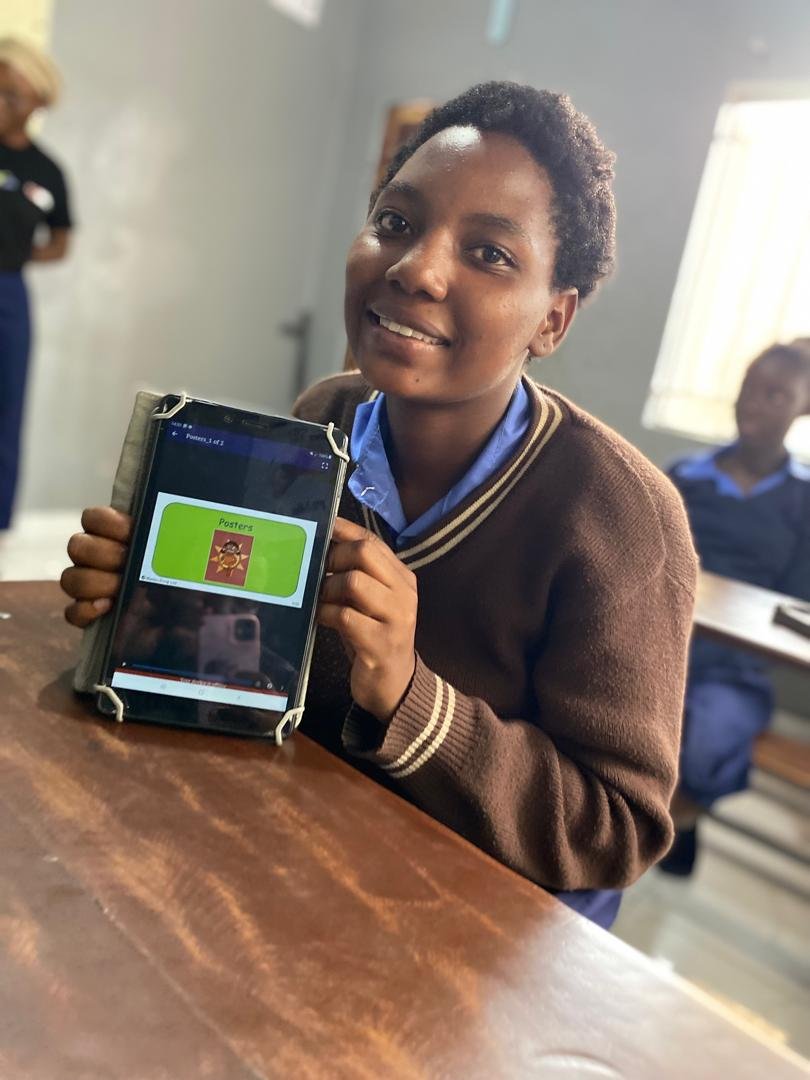
Susan has an individualized learning plan that includes digital lessons on a tablet.
Learning to Communicate: The Power of Sign Language
Susan’s breakthrough began with learning Zambian Sign Language, a language essential to her survival.
"Learning sign language changed my life in a way that I did not know basic communication with everyone," Susan explained. "I now know how to communicate and understand the world around me."
Febby taught Susan the basics, from numbers to the alphabet, and how to introduce herself. Slowly, the world around her opened up. She began to understand her once-silent world.
"Susan has really transformed," Febby shared. "She can communicate with her friends, her teachers, and people around her. She is not limited to sign language but is now able to write down her thoughts and relate with people. She has developed self-esteem. I see her smile and laugh more, things that she never did."
The transformation rippled beyond Read for Rose. At home, Susan began teaching her family basic signs. Her mother, Martha, enrolled in the Read for Rose Parent Sign Language classes and learned to communicate with her daughter for the first time. This is not an uncommon scenario. Many parents who have deaf children experience challenges in communicating with their children. The only simple signs that they do and know are to point at things, creating a big communication barrier.
“I have seen an improvement in our relationship. Susan can communicate with me. The worries and fears I had before about her not being able to survive independently are now a thing of the past.”
Finding Her Strengths & Working With Her Hands
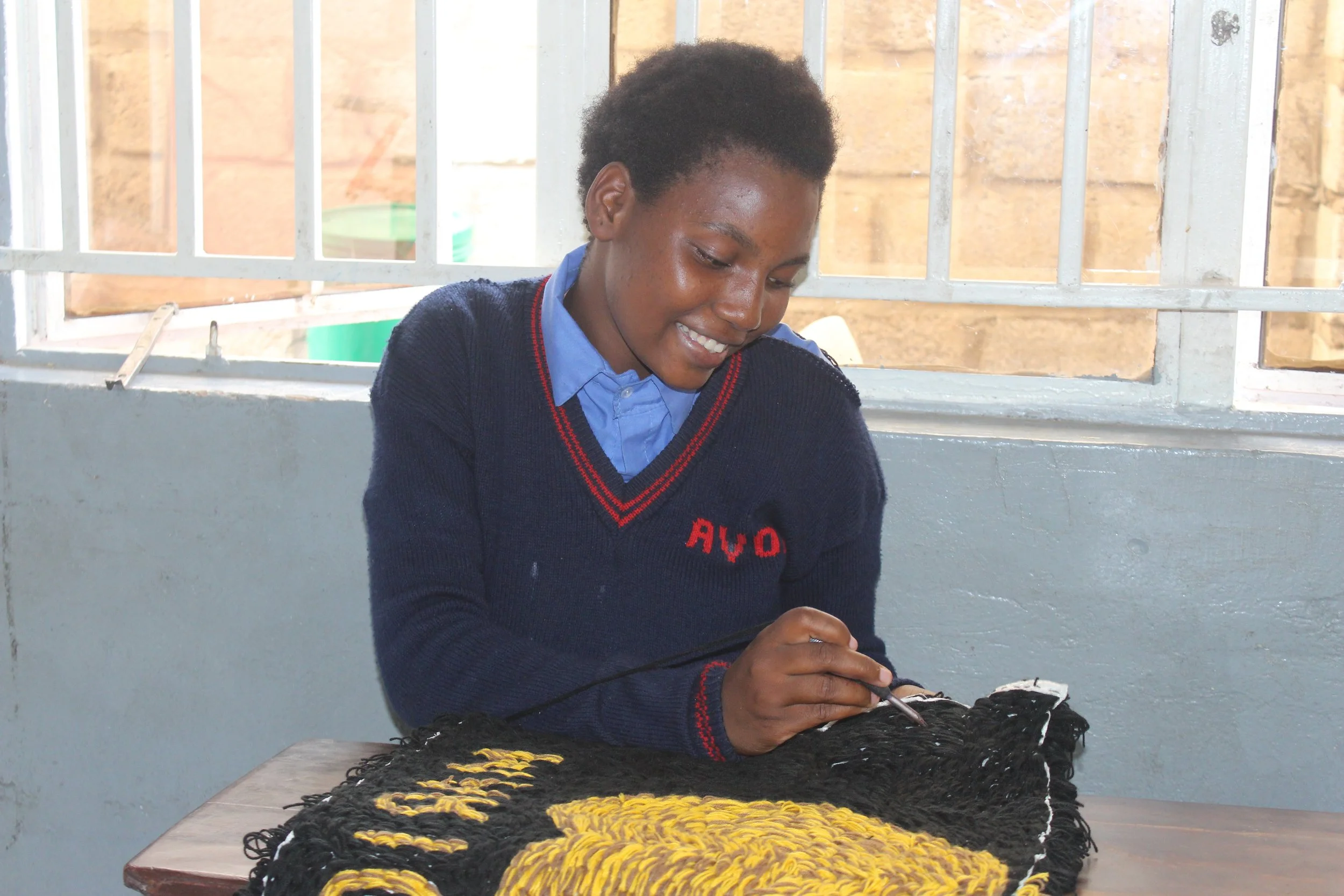
Susan learned how to knit doormats and has become quite good at it! She hopes to sell more of these mats to the local community.
While Susan made progress academically, Febby noticed something important: Susan thrived most when working with her hands.
"I noticed her interest," Febby explained. "She preferred to do hands-on activities and complete tasks on time. That helped me learn that Susan's strength is in working with her hands."
Susan was introduced to doormat knitting and gardening, low-cost, practical skills that built both independence and income generation potential. The Read for Rose Special Education Program uses a rotating timetable that balances academic sessions and individualized learning plans and holistic extracurricular activities that include the Doormat Knitting Club, Reproductive Health Club, Mental Health Club, Gardening Club, and activities for daily living. Every student participates, helping them discover their strengths and interests.
For students like Susan who learn best through hands-on activities, the teachers use visual aids, pictures, videos, and charts, combined with sign language. Tasks are broken down into small, manageable steps through scaffolded learning, ensuring every child can understand and succeed.
“I love doormat knitting because it helps me discover myself,” Susan shared. “When I completed my first doormat, I was very happy because I did not know that I could do it. I was proud of that accomplishment.”
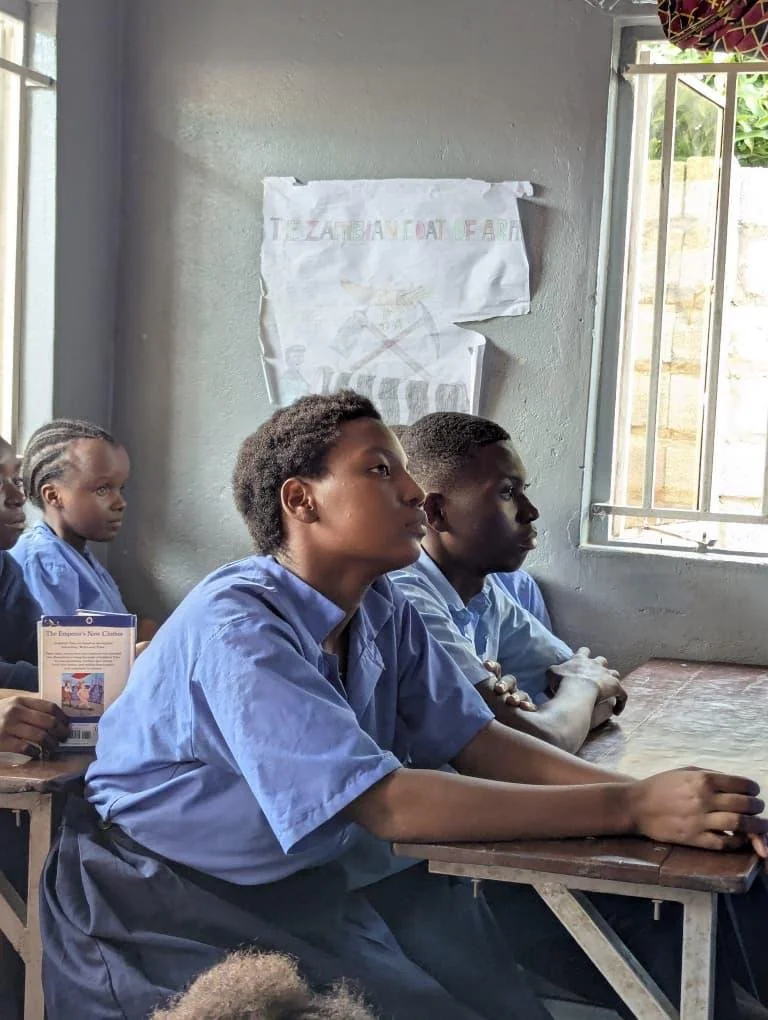
Read for Rose students accesses visual and interactive content tailored to their individual learning needs.
The skills she learnt while at Read for Rose transferred to her home. Susan started a small garden where her family grows vegetables now. She has made doormats that her mother proudly uses, and has learned basic entrepreneurship and money management skills through the weekly entrepreneurship classes conducted.
"Doormat knitting has helped me love working with fabrics because I also want to become a tailor," Susan said. "It has also helped me communicate because I can work with friends. It has helped me grow socially."
Today, Susan is 16 years old, and in grade 7, she is unrecognizable from the isolated girl who arrived seven years ago. She reads, writes, and communicates fluently in sign language. Most importantly, she has friends. She laughs. She dreams.
"I want to have a shop where I will be a hairdresser because I like braiding people's hair, selling doormats, and making a living for myself," Susan shared. "I want a machine for tailoring beautiful things."
Susan’s mother's perspective has completely shifted. "I believe that Susan has a lot of potential to excel. She can become a tailor and even a hairdresser because these are things that she shows interest in."
Febby sees Susan's future clearly: "I see her independent, having an established business. She has good role models and the skills to make it happen."
“I want to have a shop where I will be a hairdresser because I like braiding people’s hair, selling doormats, and making a living for myself. I want a machine for tailoring beautiful things.”
Seven Years Of Growth
Susan's transformation didn't happen overnight; it took seven years of consistent, patient, individualized support.
Susan's story is proof that when children with disabilities receive consistent, individualized, inclusive education, they don't just survive, they thrive. They discover talents, they build confidence, and they dream big dreams and develop the skills to achieve them.
The Read for Rose Special Education Program isn't just teaching students to read and write. It's teaching them to believe in themselves, to communicate with the world, and to build independent, dignified lives.
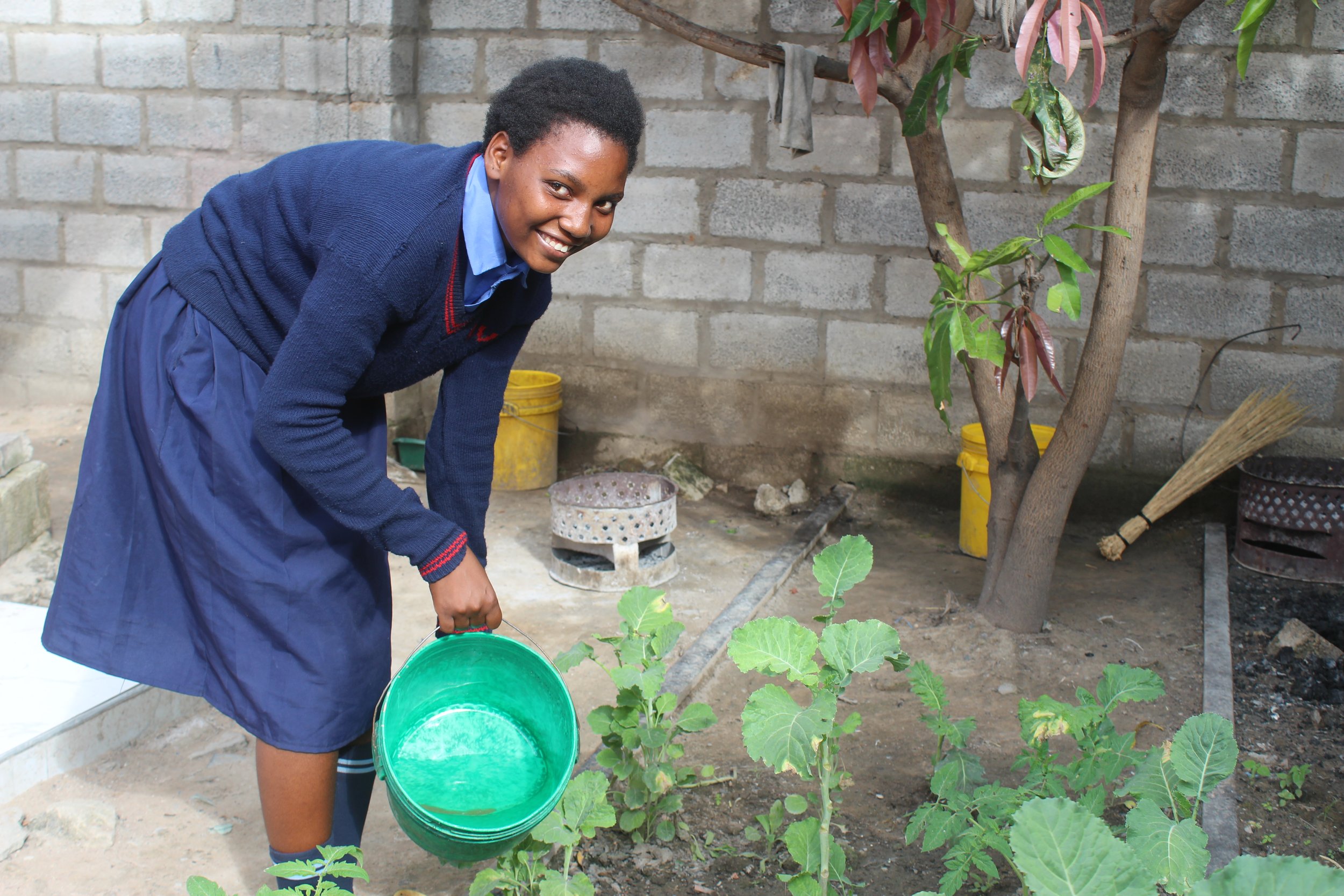
Susan enjoys taking care of the garden at Read for Rose. The vegetables grown are a part of the daily Nutrition Program.
For Susan, the program provides more than education. It provided a sense of belonging, safety, hope, and a future. Today, Susan has friends, real friendships built on shared experiences, mutual understanding, and acceptance. She laughs with her peers, works alongside them in the garden and doormat knitting club, and communicates freely through sign language. This sense of community is not incidental; it is central to AYC's mission to ensure that learners with disabilities are fully integrated into society, not isolated from it. Inclusion means more than access to classrooms; it means belonging to a community where every child is valued, seen, and connected.